How Do I Know If a Lip Makeup Supplier's MOQ Is Reasonable?
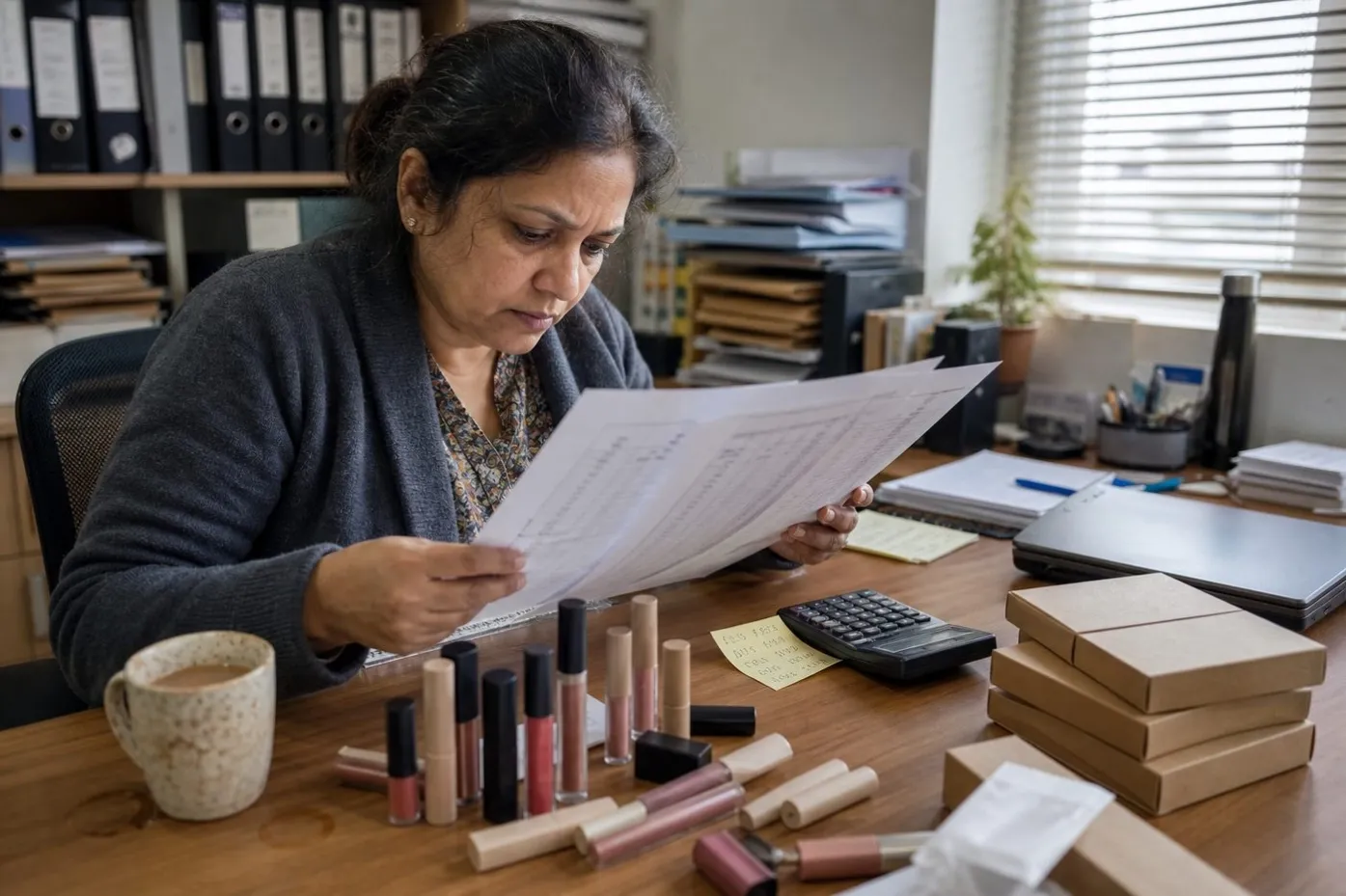
Three lip makeup supplier MOQ quotes crossed my sourcing desk last week, each counted differently. That confusion stalls launches, drains cash, and buries new brands in unsold shades.

Three lip makeup supplier MOQ quotes crossed my sourcing desk last week, each counted differently. That confusion stalls launches, drains cash, and buries new brands in unsold shades.
A lip makeup supplier's MOQ is reasonable when it fits your product type — roughly 100–500 units for stock or white-label formulas and 5,000+ for custom formulation — states clearly whether it counts per order, per shade, or per packaging component, and keeps landed cost below about 65% of wholesale price.
That answer sounds simple. In practice, most buyers only see a single number on a quote sheet. This article breaks down where that number comes from, how to compare it across suppliers, which warning signs matter, and how to weigh it against your own budget and market.
What factors actually determine a lip product MOQ, and why does it vary so much between suppliers?
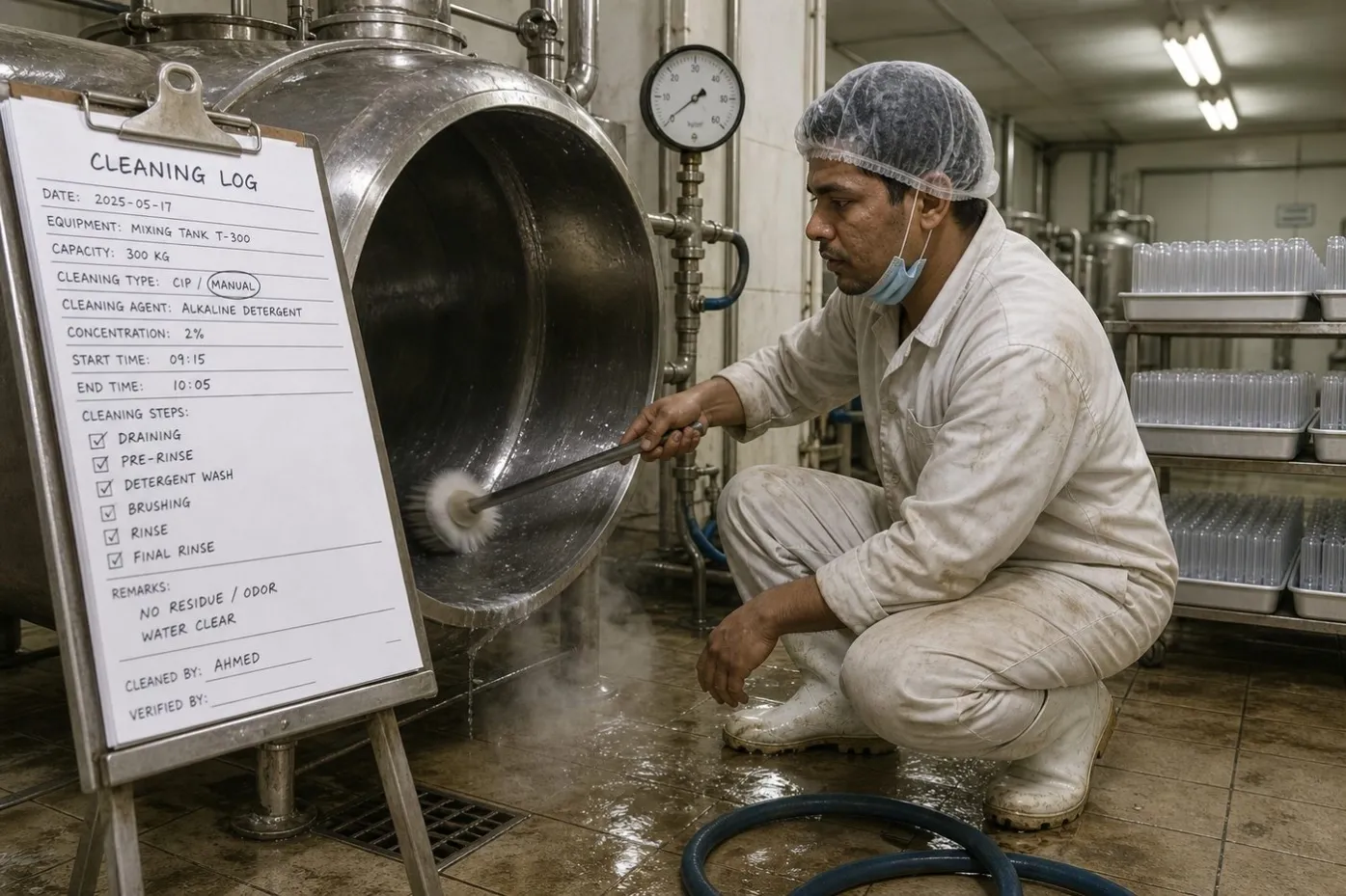
During a filling-line audit at one of our partner factories, I watched a technician sanitize a 300kg mixing tank for two hours before a single lip gloss tube was filled.
Lip product MOQs are set by minimum mixing tank capacity, fixed calibration and sanitization labor, packaging component floors, and specialty pigment purchase requirements. Your effective MOQ is the highest common denominator of these factors, which is why quotes range from 100 stock units to 5,000-plus custom units.

That sanitization scene explains half of MOQ logic on its own. Contract manufacturing carries fixed production overhead — cleaning, machine calibration 1, line changeover — that costs the same whether the run is 500 units or 5,000. A small run must absorb those costs across fewer tubes, so the per-unit price climbs fast.
The physics of the mixing tank
A tank has a minimum working volume. A 300kg tank generally needs to be at least two-thirds full for proper emulsification and even heat distribution. Below that level, the batch can fail. So the formula side of the MOQ is not a negotiating position. It is chemistry and equipment.
Packaging often sets the real floor
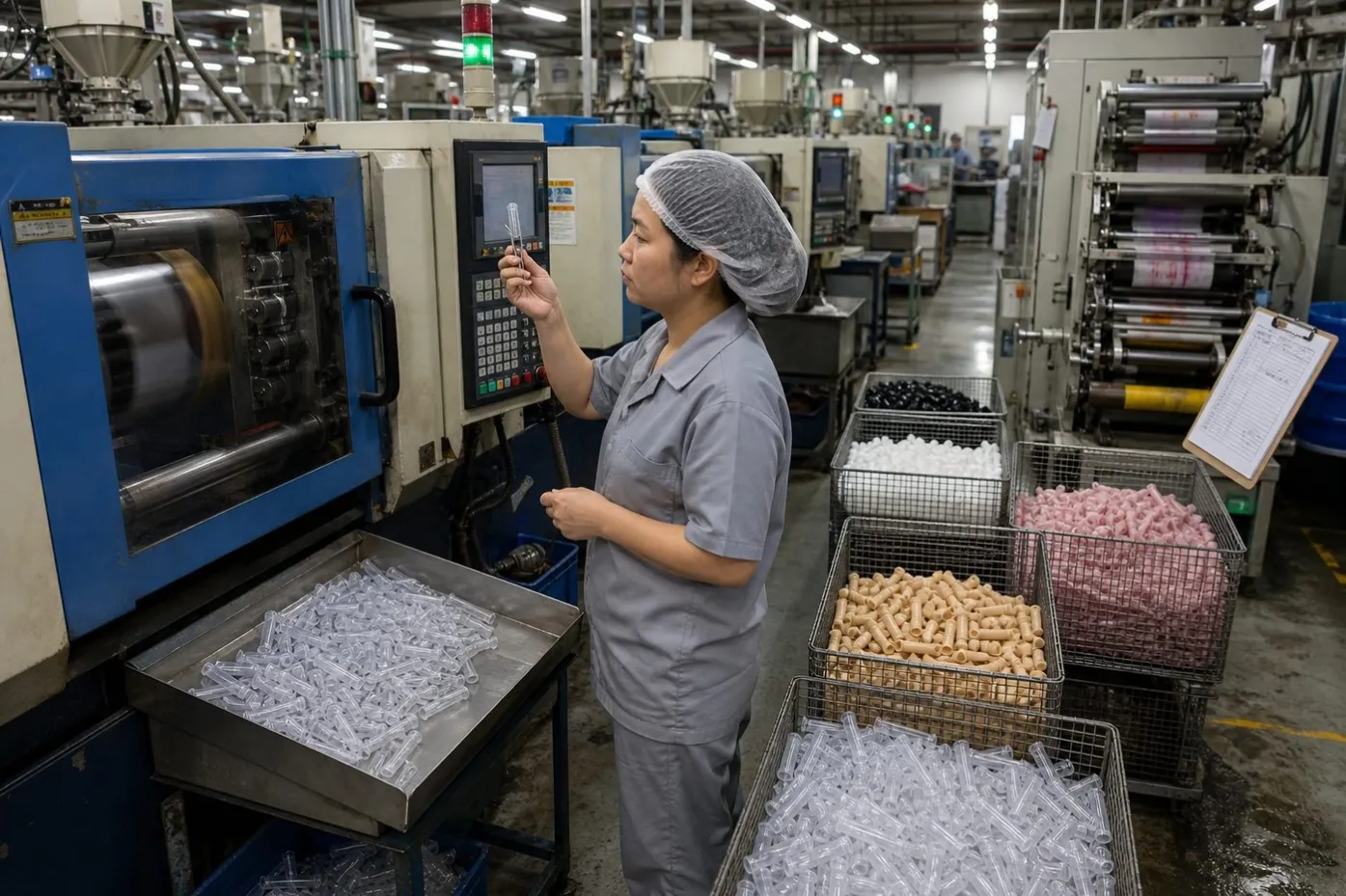
Here is what surprises most buyers I work with: the effective MOQ is frequently dictated by the tubes and boxes, not the liquid formula. Component manufacturers run injection molding 2 and printing lines with their own, often higher, minimums. Sustainable options such as PCR plastic or refillable aluminum tubes typically carry a 20–30% higher MOQ than virgin plastic, because eco-material processing needs longer, more stable machine runs.
| Product type | Typical MOQ | Why |
|---|---|---|
| Stock/ready-made formula and packaging | 100–500 units | Everything already exists; small batch production 3 is easy |
| White-label with your branding | 300–800 units | Base formula exists; only decoration changes |
| Private label with custom shade | 1,000–3,000 units | Dedicated batch, color matching, setup |
| Custom formulation or custom mold | 5,000+ units | R&D, stability work, packaging tooling |
Expect a low-volume premium too. A 100-unit order can cost 200–300% more per unit than a 5,000-unit run, largely because small quantities often get filled by hand.
How do I compare MOQ terms across different lip makeup suppliers without missing hidden conditions?
A founder in Dubai once sent me two lip gloss quotes: one said MOQ 1,000, the other 3,000. After I asked the counting basis, the cheaper one tripled.
Compare MOQ terms by confirming the counting basis first: per total order, per shade, per bulk formula, or per packaging component. Then request three numbers in writing — production MOQ, total units received, and total units paid for — plus shade-mixing rules and separate reorder minimums.

That Dubai case taught me the single most useful question in lip makeup sourcing. When I evaluate quotes for clients, the first thing I confirm is what the MOQ actually counts: the whole order, each color, the bulk formula batch, or the packaging components. The real questions are always the same three: what is the minimum number of tubes, across how many shades, and in what packaging. Two suppliers quoting "MOQ 1,000" can mean completely different commitments.
The shade-mixing question changes everything
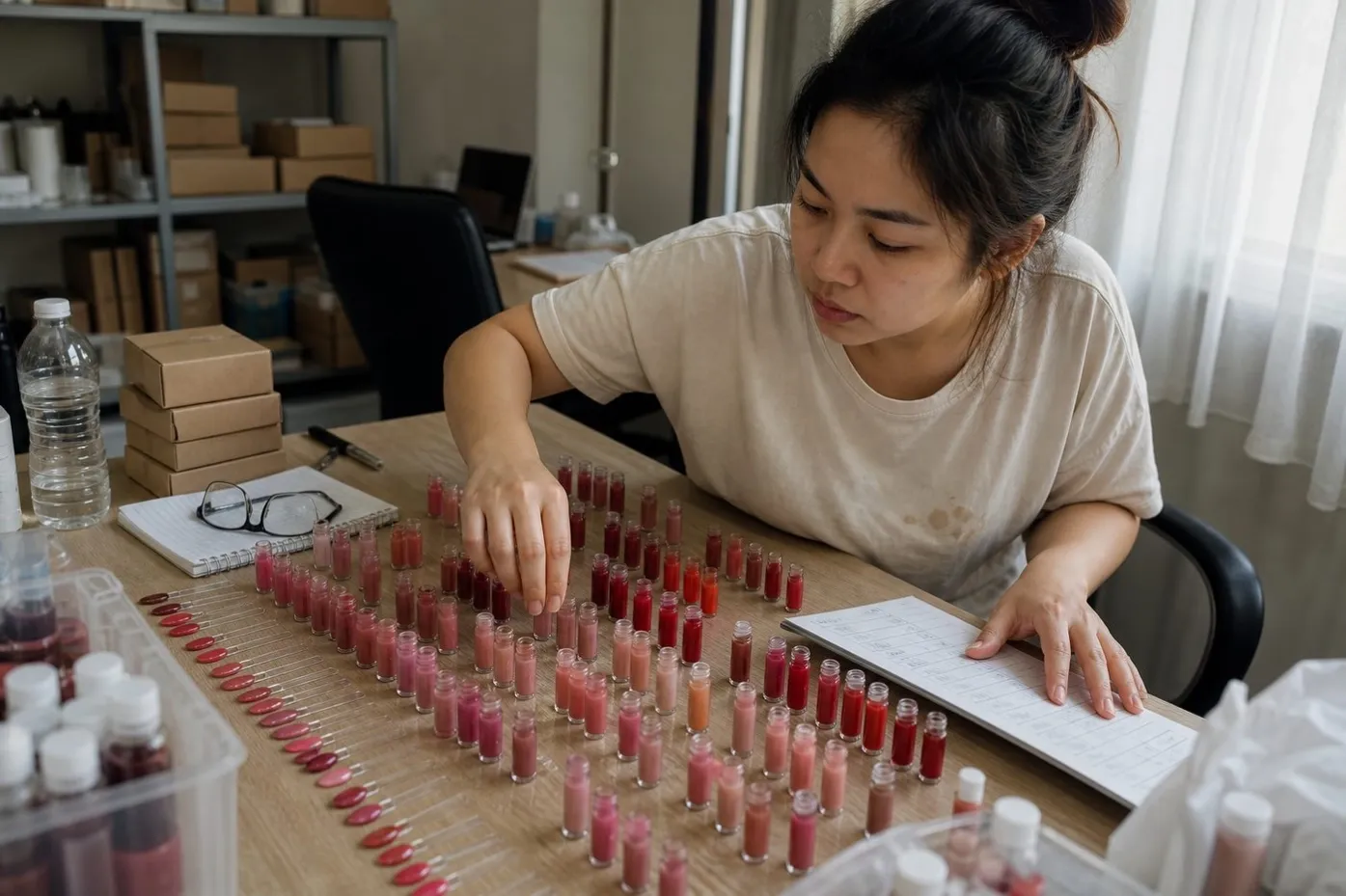
Many suppliers allow shade mixing, meaning you can meet a single 1,000-unit MOQ by splitting it across four or five colors of the same base formula. For a lip brand, that is the difference between launching a collection and launching one lonely shade. Always ask whether mixing is allowed and what the per-shade minimum is within the total.
Put the numbers in a written agreement
Before you sign a cosmetic manufacturing agreement, get three figures documented: the production MOQ, the total finished units you will receive, and the total units you will pay for — including stability samples and third-party testing units. These often differ, and the gap is where budgets quietly leak. Also separate the launch MOQ from the reorder MOQ, and ask how wholesale pricing tiers shift at each volume break.
| Question to ask | Why it matters |
|---|---|
| Is MOQ per order, per shade, or per component? | Prevents a 1,000-unit quote becoming 5,000 units |
| Is shade mixing allowed within one MOQ? | Lets you launch 4–5 colors without overstocking |
| Launch MOQ vs. reorder MOQ? | Reorders are sometimes lower — or higher |
| Units paid for vs. units received? | Testing and retention samples come out of your run |
| What does the sample order process cost and include? | Confirms color and texture before bulk commitment |
In our coordination work, we run this checklist on every quote before it reaches the client, because a clean side-by-side comparison beats a lower headline number every time.
What warning signs tell me a supplier's MOQ policy might cause problems once I place a bulk order?
My hardest lesson coordinating bulk lip orders came from a suspiciously low minimum. The goods arrived with visible air bubbles, and the seller had no batch records to trace.
Warning signs include MOQs quoted without a counting basis, very low minimums with no GMP or ISO 22716 documentation, stability testing described as optional, no batch traceability, vague answers about who actually manufactures, and small runs filled on manual lines that risk fill-weight variance.

That order looked like a bargain on paper. It taught me that a very low MOQ is not automatically a gift — it can signal weak controls. Some suppliers advertise private label cosmetics at just 100 units, and while that is not always a scam, it should trigger deeper diligence rather than automatic acceptance. Here are the signals I now screen for, in rough order of severity:
- No verifiable GMP or ISO 22716 documentation. If the seller cannot show partner-factory certificates, the low MOQ may exist because proper controls do not.
- Stability and preservative testing framed as optional. Lip products separate, sweat, and shift color over a 24–36 month shelf life. Skipping stability work to hit a small MOQ moves that risk onto your brand.
- No batch traceability. If something goes wrong at retail, you need to trace which batch, tank, and component lot produced it.
- Vague answers about who actually manufactures. Trading companies posing as factories often quote MOQs they cannot control.
- Manual filling on tiny runs. Low MOQs frequently rely on semi-automatic or hand filling, which increases fill-weight variance and air bubbles compared to automated lines.
- Testing costs excluded from the quote. Fixed regulatory costs — MoCRA compliance work, stability testing, label review — do not shrink with order size. Spread over too few units, they can make the whole order commercially unviable.
- No shade flexibility on a high MOQ. Forcing you to take 1,000 units of a single color is its own red flag in a shade-driven category.
Micro-MOQ providers offering 12–24 units through digital UV printing and pre-filled stock cartridges have a real place for influencer drops and trend testing. Just understand what you are buying: speed and flexibility, not a scalable supply chain logistics setup.
How should I balance MOQ against my budget, packaging choice, and target market before committing?
Every project brief we match against partner factories forces the same trade-off: a lower MOQ preserves cash, while a higher one buys better unit cost and packaging options.
Balance MOQ by calculating full landed cost — units, shipping, duties, lab testing, label compliance, a 12% buffer, and 0.8% monthly storage — and keeping it under 65% of wholesale price. Multiply your 12-month forecast by 1.3 for safety stock, then match packaging complexity to proven demand.

The factory quote is not the number that decides whether an MOQ is reasonable. The landed cost is. I walk clients through a simple unit cost analysis before any commitment, and the math changes minds more often than any negotiation does.
Run the landed cost worksheet
| Cost item | How to calculate |
|---|---|
| Goods | MOQ × unit price |
| Freight | Sea or air shipping to your warehouse |
| Duties | Import tariffs for your market |
| Testing | Lab testing and label compliance fees |
| Buffer | Add roughly 12% for surprises |
| Storage | About 0.8% of goods value per month |
Compare the total against your wholesale price multiplied by 0.6. If landed cost exceeds 65% of wholesale, the MOQ is probably too high for your business model — even if the per-unit price looked attractive. A lip makeup supplier MOQ that only seems reasonable because the unit price dropped slightly, while the total cash outlay destroys margin, is not reasonable in business terms.
Match the MOQ to demand, not ambition
Build a 12-month forecast by channel, then multiply projected units by 1.3 for safety stock. Remember the timing realities: DTC beauty conversion rates average just 1.2–2.8%, wholesale order cycles 4 can run 90–180 days, and production plus customs and testing can require roughly 20 weeks of lead time. Count backward from your launch date. Shade allocation matters just as much — in one category example, the top 3 bestselling shades drove 72% of revenue, so weight your MOQ heavily toward proven colors and let your inventory turnover rate, not optimism, guide reorders.
Resolve the low-versus-high MOQ debate by SKU role
Some buyers insist lower is always better for startups; others argue higher MOQs earn better unit costs and supplier commitment. Both are right — for different SKUs. Use stock packaging and small batch production for test launches, since packaging lead times for custom molds and Pantone matching add weeks and risk. Reserve higher MOQs, custom tubes, and deeper customization for hero shades with proven sell-through, where the added commitment buys real differentiation. Postpone "nice to have" decoration to the reorder.
Conclusion
Unclear MOQs sink more lip launches than bad formulas do. Confirm the counting basis, verify documentation, run the landed cost math — then commit only to what your forecast supports.
Footnotes
1. ISO sets international standards for equipment calibration and quality management in manufacturing environments. ↩︎
2. Explains the industrial process used to create plastic cosmetic tubes and components. ↩︎
3. Official FDA portal for regulations and safety information regarding cosmetic product manufacturing. ↩︎
4. U.S. government resource for understanding international trade timelines and supply chain management. ↩︎