Sep 25, 2026Startup & Private Label Guides
Matching a Competitor's Lip Product vs Developing Your Own Formula: What Actually Works?
Duplication usually fits tighter budgets because the target texture, shade, and performance already exist, cutting lab iterations and R&D expenditures.
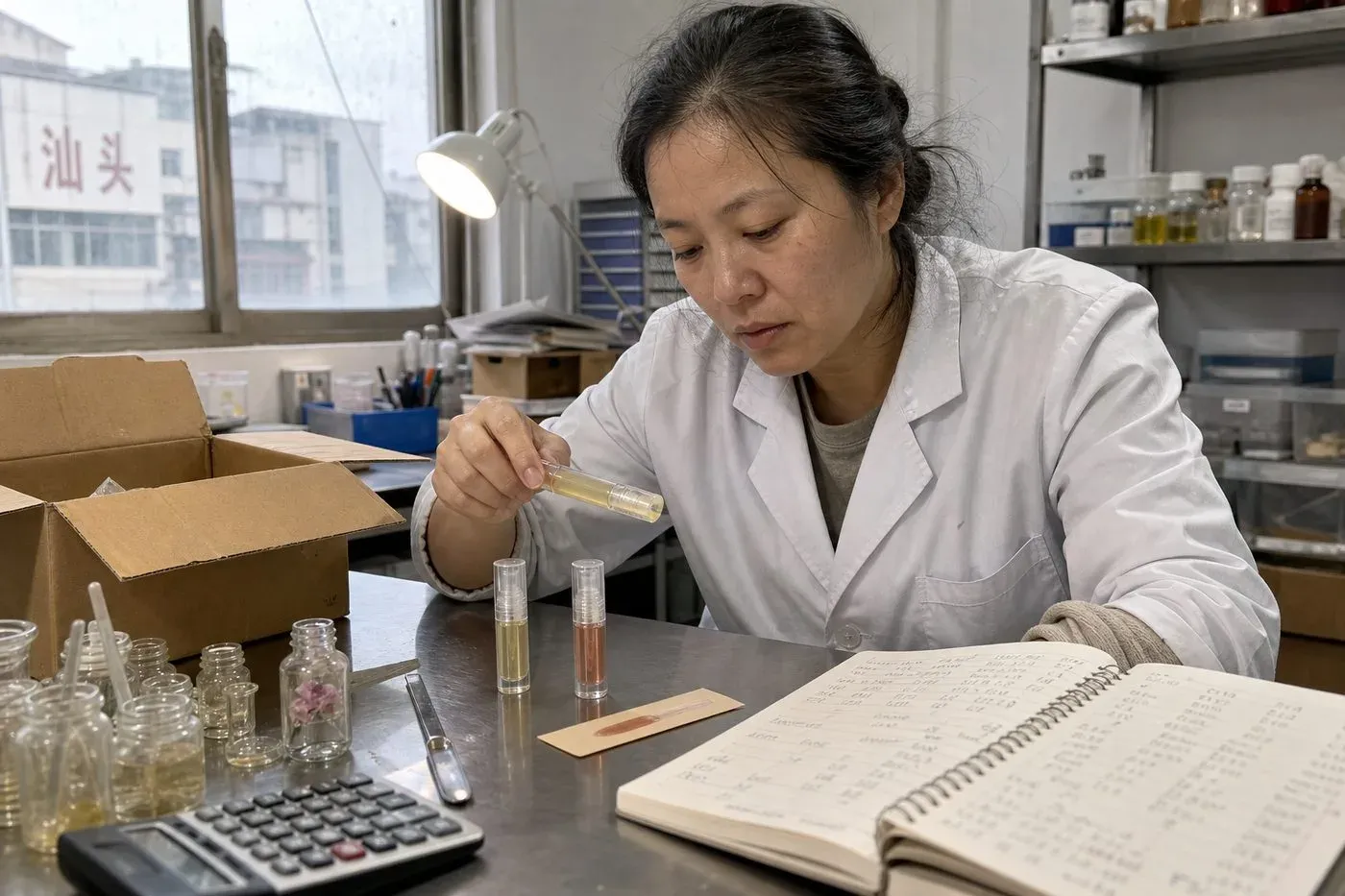
Buyers ship me competitor lip oils and ask us to copy them. Choosing to duplicate a reference sample or develop a formula from scratch shapes your budget, timeline, and legal risk.
Duplicate a reference sample when you need to de-risk a proven market opportunity and reach shelves fast; develop a formula from scratch when formula ownership and differentiation matter more. Duplication delivers speed and lower R&D expenditures, while scratch development delivers exclusivity and cleaner intellectual property rights.
Both paths can work. The right one depends on your budget, your launch date, and how your brand plans to compete. I coordinate cosmetics projects between overseas brands and vetted partner factories in China every week, and this exact question appears in most briefs. Let me walk you through how I help buyers decide, and what actually happens when a competitor product lands on a lab bench.
How do I know which option fits my budget and MOQ better?
Last quarter, a UK founder sent us two benchmark lip tints and one spreadsheet. Her question was not about chemistry. It was about cash: which path fits her first purchase order?
Duplication usually fits tighter budgets because the target texture, shade, and performance already exist, cutting lab iterations and R&D expenditures. Scratch development front-loads cost into bench work and stability testing. Exact MOQ, sample fees, and pricing are always confirmed against your specific project scope.
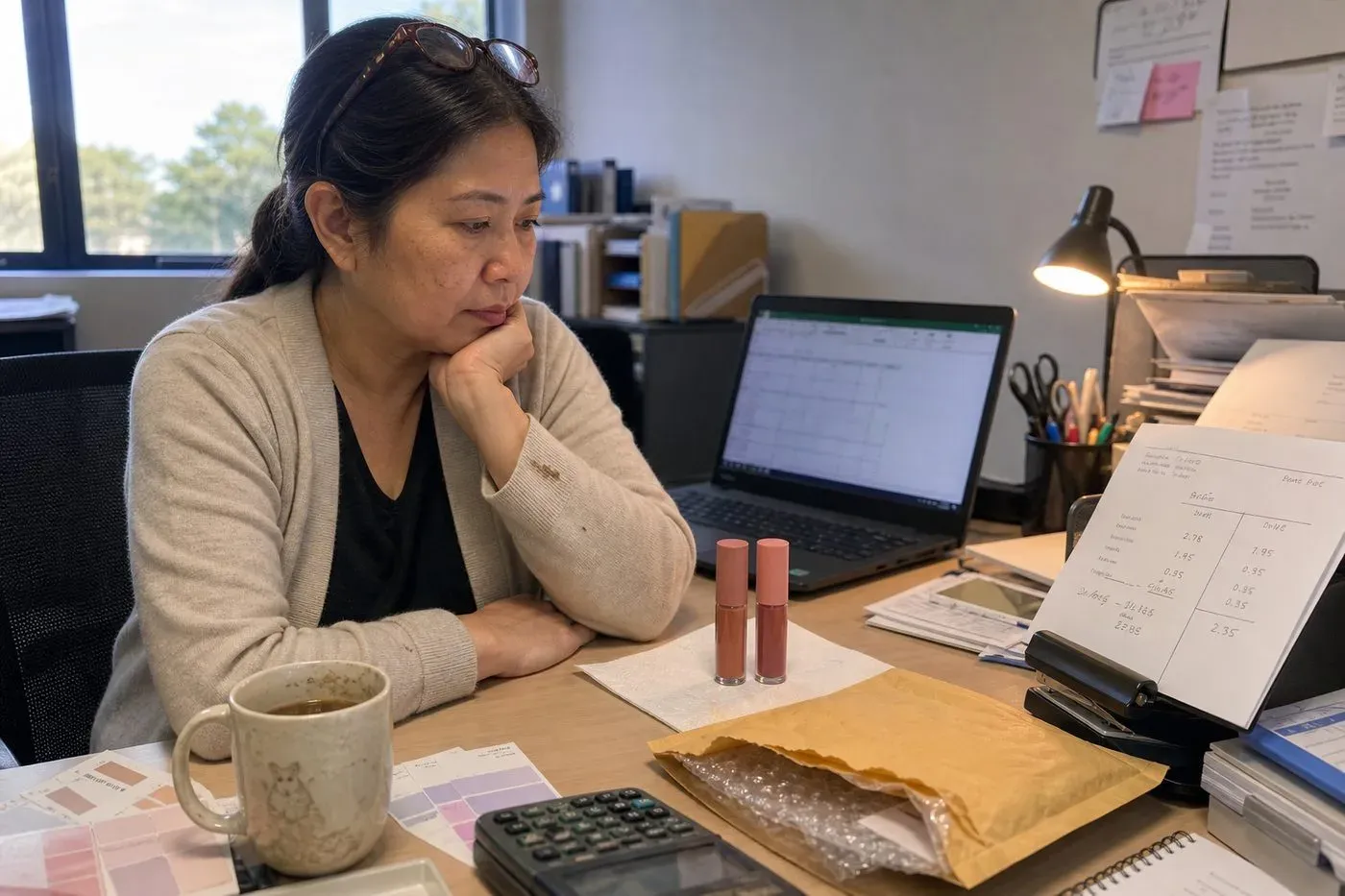
When I review a brief, I look at where the money actually goes in each path. The comparison below reflects how costs behave in the contract manufacturing projects we coordinate, not fixed price lists.
Cost driver | Duplicate a reference sample | Develop from scratch |
|---|---|---|
Concept and discovery | Minimal; the benchmark defines the target | Significant; brief, mood boards, and positioning work |
Lab iterations | Fewer rounds, aimed at closing the gap to the benchmark | More rounds, because the target itself evolves |
Sample fees | Confirmed per project scope | Confirmed per project scope; usually more rounds |
Raw material sourcing | Constrained by what the benchmark implies | Open; ingredients can be chosen for multi-source availability |
MOQ pressure | Often lower, since partner factories may adapt existing bases | Can rise if the formula needs special ingredients |
Why the benchmark changes the math
Sample-based development works as a feasibility check before you commit real money. Industry OEM workflows often involve sending three to five reference formulas back to the buyer so they can compare sensory differences and pick the closest profile. We run a similar benchmarking analysis in our coordination window: we match your reference against what our partner factories already run well, then quote against that gap. A small gap means fewer paid sampling rounds. A large gap starts to look like custom product development anyway, and I will tell you that before you spend.
Where scratch development earns its cost back
Some buyers object that duplication is always cheaper. Not always. If your reference contains hard-to-source or single-supplier ingredients, raw material sourcing can push your MOQ and unit cost above a clean-sheet formula designed around available materials. A scratch formula can also be engineered for a partner factory's existing equipment, which supports better long-term unit economics. Every figure — MOQ, price, sample fee — is confirmed against the specific project scope, because a lip oil for the EU and a mascara for South Asia sit in completely different cost structures.
What are the risks if my duplicated sample doesn't match bulk production?
During a pre-shipment inspection of duplicated lip gloss, our inspector flagged a shine level lower than the approved sample. The factory had substituted one ester. Nobody had told the buyer.
The main risks are ingredient substitutions during raw material sourcing, texture drift at larger batch sizes, packaging incompatibility, and stability failures the reference never revealed. Reduce them with a signed golden sample, pilot batches, formula-to-packaging compatibility checks, and independent quality inspection before shipment.
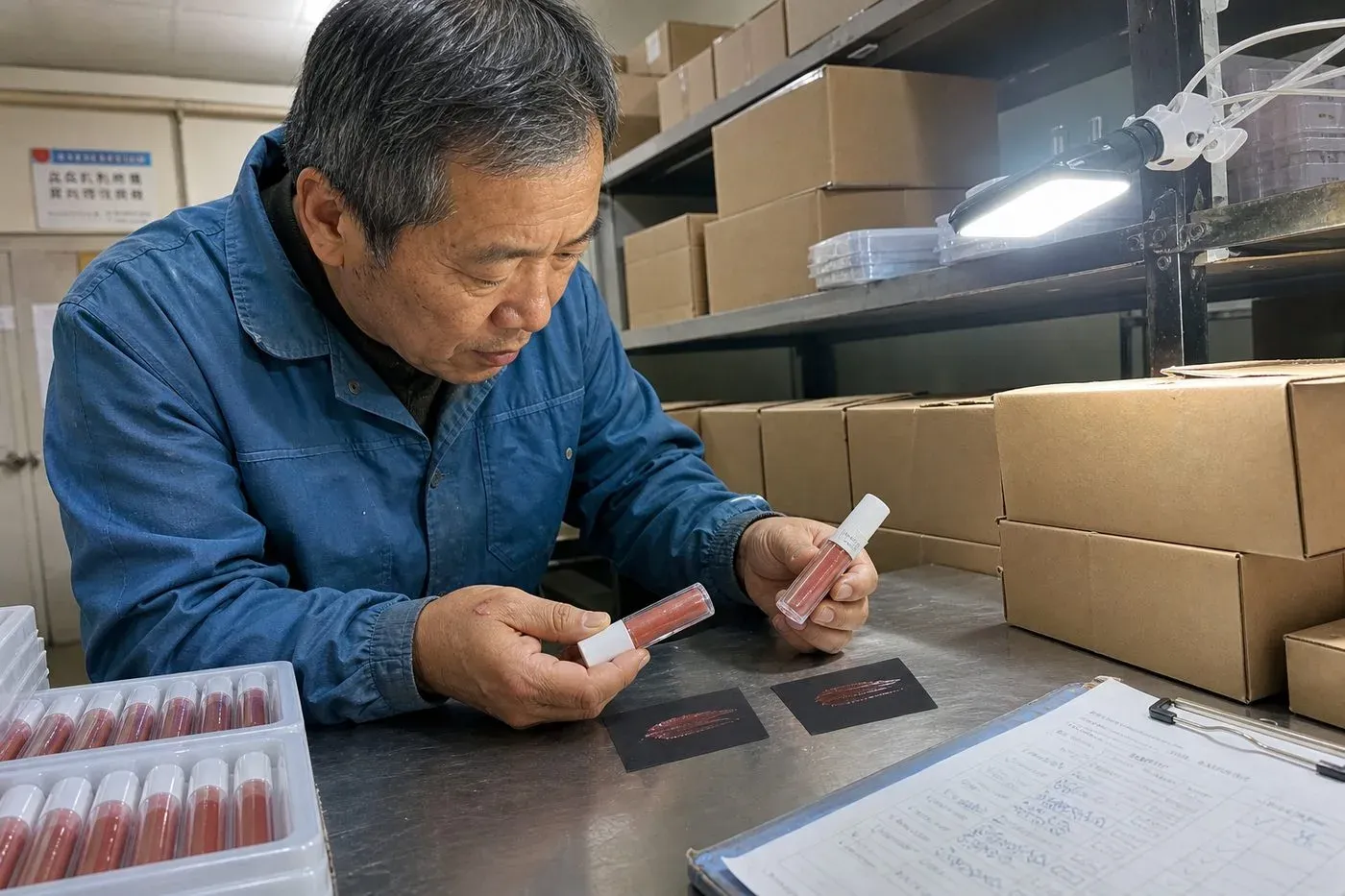
Here is the uncomfortable truth I share with every buyer who hands over a competitor product: a lab match is not a production match. Even sophisticated reverse engineering 1 has limits. Deformulation analysis and tools like GC-MS can identify many components, especially volatiles, but analytical matching 2 does not automatically recreate full sensory performance, stability behavior, or safety in your target market. Ingredient ratios, processing order, and supplier substitutions all change the outcome.
What can realistically be matched, and what drifts
Attribute | Match confidence in duplication | Common drift point in bulk |
|---|---|---|
Shade and color payoff | High, with iterative adjustment | Pigment lot variation between batches |
Texture and viscosity | Moderate to high | Batch size changes shear and cooling behavior |
Fragrance profile | Moderate | Raw material substitutions by suppliers |
Wear time and finish | Moderate | Processing order differences at scale |
Stability over shelf life | Unknown from the sample alone | Only revealed by proper stability testing |
How we control the gap
Our coordination process exists largely because of this risk. Before bulk, we lock a golden sample signed by both sides. We run formula-to-packaging compatibility checks, because a formula that behaves in a lab jar can wick, leak, or separate in a specific lip gloss tube or mascara tube. We follow production and inspect against the approved sample before goods ship. Test reports and partner-factory documentation are available upon request. One thing we never do is skip the pilot batch to save time; a formula that matches in a small beaker can behave differently at commercial volume, and that is true whether you duplicated or developed from scratch. Regulatory review, labeling, and safety assessment remain the responsibility of the brand owner or the appointed responsible person in the target market.
✔ A duplicated sample that matches in the lab can still drift in bulk production because batch size changes mixing, shear, and cooling behavior TrueScale-up alters processing conditions, so pilot batches and stability testing are essential steps in both duplication and scratch development, not optional extras.✘ GC-MS or deformulation analysis can fully recreate any cosmetic formula from a finished product FalseAnalytical testing identifies many components but cannot recover exact ratios, processing order, or supplier-specific raw materials, so sensory and stability performance must still be rebuilt through trial batches.
How long does each approach take from brief to production-ready goods?
Timeline questions come up in every brief I review. Founders usually plan backward from a launch date, then discover that stability testing does not compress just because a benchmark exists.
Duplication is typically faster because the target already defines success, removing open-ended concept rounds. Scratch development adds discovery, more prototypes, and wider testing. Both paths still require sampling, stability work, and pilot validation, so exact lead times are confirmed against each project's scope.
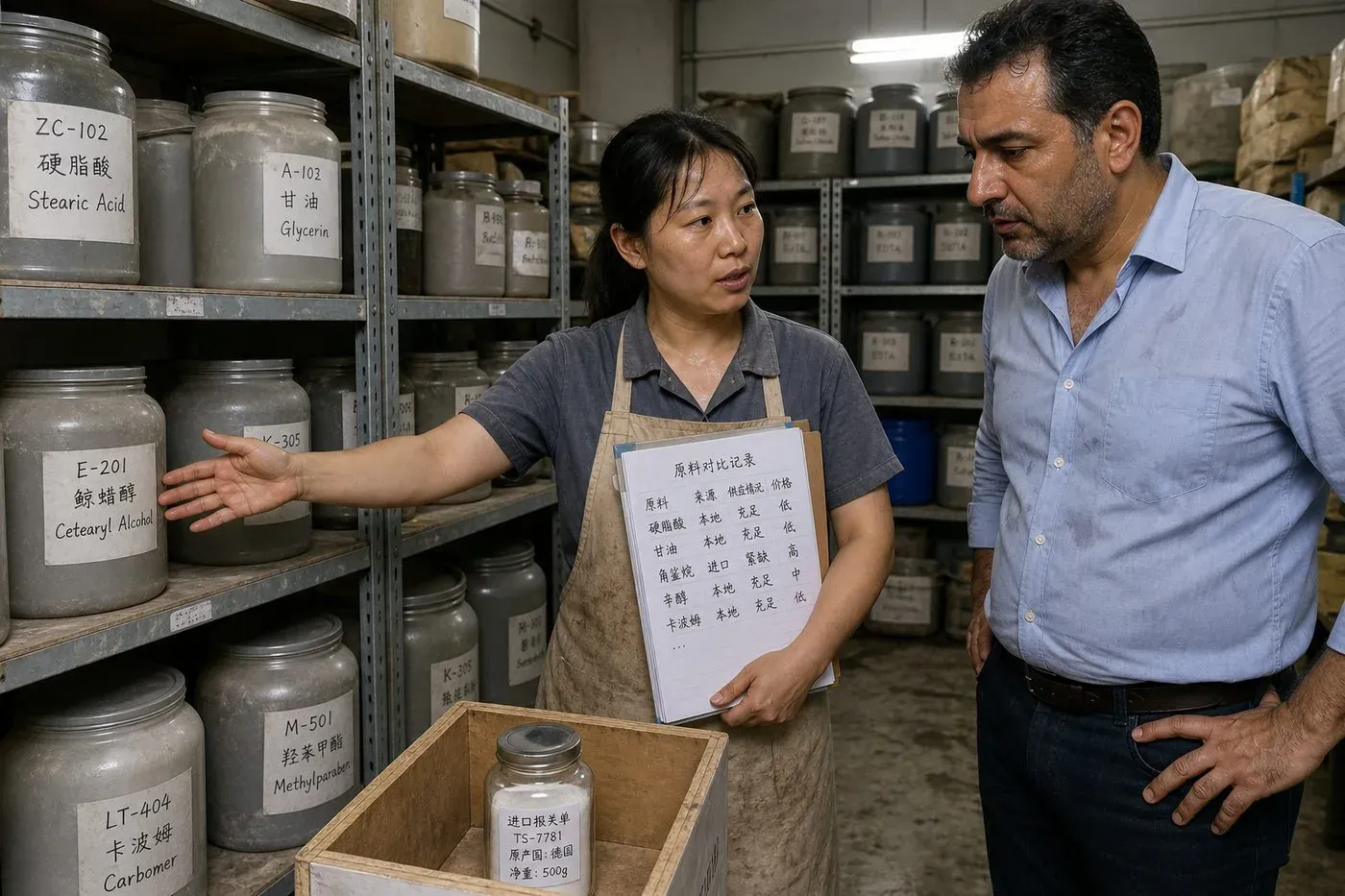
Time-to-market efficiency is the strongest argument for duplication, but I want to show you where the time actually goes. Industry guidance describes a roughly ten-step duplication workflow: obtaining samples, analyzing ingredient lists, using patents as clues, generating starting formulas, consulting key suppliers, creating prototypes, testing, and refining until the prototype sits as close to the reference as possible. Scratch development follows a similar backbone but adds an open-ended front end. Here is how the two paths move through our coordination window:
- Brief intake. Duplication briefs arrive nearly complete, because the reference answers most questions. Scratch briefs need target audience, claims direction, and sensory goals defined first.
- Supplier matching. We match by formula capability, packaging, MOQ, budget, and target market. A close benchmark shortens this step; a novel concept lengthens it.
- Sampling and iteration. Duplication converges toward a fixed target. Scratch development can move the target between rounds, which is where most timeline surprises live.
- Stability and compatibility. Neither path skips this. A benchmark tells you the reference was stable in its packaging, not that your version will be stable in yours.
- Pilot batch, production follow-up, inspection, export documentation, and shipment.
Stage | Duplicate a reference sample | Develop from scratch |
|---|---|---|
Concept definition | Very short; the benchmark is the spec | Longest single addition to the timeline |
Sampling rounds | Fewer, convergent | More, exploratory |
Stability testing | Full duration required | Full duration required |
Total to production-ready | Shorter overall; confirmed per scope | Longer overall; confirmed per scope |
I will not quote lead times in an article, because a multi-shade lip tint line and a single-shade lip oil are different projects. What I can promise is a realistic timeline at brief stage, before you commit to sampling.
✔ Duplication saves time mainly at the concept and iteration stages, not at the testing stage TrueA benchmark removes open-ended discovery rounds, but stability testing, compatibility checks, and pilot validation 3 run at full length on both paths.✘ Handing a factory a reference sample means production can start almost immediately FalseEven a close duplicate still needs trial batches, stability work, and packaging compatibility validation before it is production-ready, because the reference reveals nothing about how a new version will behave.
Which choice gives my brand more room for future formula differentiation?
One lesson from coordinating lip and mascara projects across the US, Europe, and South Asia: brands that only duplicate eventually compete on price alone, because everyone else can duplicate too.
Scratch development gives more differentiation room because you control ingredient list optimization, sensory profile, claims direction, and intellectual property rights from day one. A duplicated formula stays a near-match anyone can benchmark. The practical middle path: benchmark a reference, then reformulate into a distinct product.
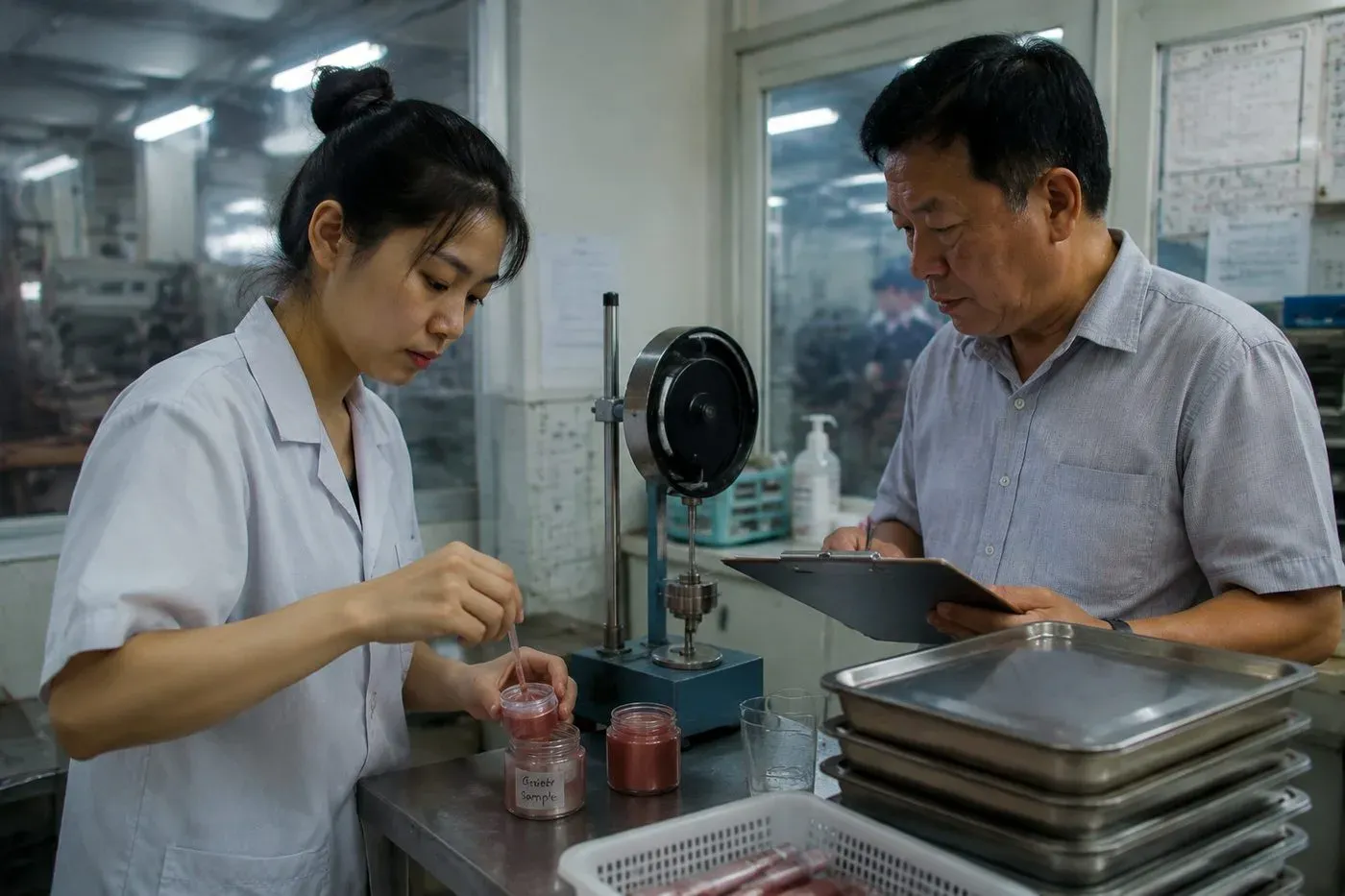
This is where I push buyers to think past the first purchase order. When you duplicate a reference sample, you are entering a market segment someone else validated. That is smart de-risking. But your product has no moat. The same reverse engineering path you used is open to every competitor, and the original brand may hold protections you cannot see from the jar.
The legal and ethical boundary you should expect
A responsible development partner will not promise an unauthorized exact copy of another company's proprietary or patented formula. If a supplier tells you they can clone a protected product identically, treat that as a red flag about how they will treat your formula later. In our coordination work, we frame duplication as benchmarking analysis: the reference guides texture, shade, and performance targets, while the resulting formula is built lawfully from available raw materials. Patents and published ingredient lists serve as research clues, not as blueprints to infringe. Intellectual property rights questions — and all regulatory, labeling, and safety-assessment obligations — sit with the brand owner or the appointed responsible person in the target market. Supporting documentation from partner factories is available upon request.
Reformulation as the middle path
The strongest position I see is benchmark-then-diverge. Start from a reference to lock the sensory direction, then change enough variables to create a distinct product you can own and retell. Practical levers include swapping the hero ingredient story, adjusting the finish or wear profile, running ingredient list optimization 4 toward your market's clean-label expectations, and excluding legacy ingredients that are legal today but facing growing scrutiny. Scratch and reformulated projects also let you choose multi-source ingredients, which protects future production from single-supplier bottlenecks. That flexibility matters more with every reorder, and it is exactly the kind of decision a long-term coordination partner should be raising before sampling starts, not after.
✔ Using a competitor product as a benchmark, then reformulating into a distinct product, is a recognized and lawful development path TrueSample-based development is widely treated as benchmarking and feasibility work; the final formula is built independently from lawful raw materials rather than copied from protected work.✘ Matching a product's published ingredient list gives you the same formula and the right to sell it FalseAn ingredient list reveals neither ratios nor processing, and the original formula may carry patent or trade-secret protection, so a list match is neither a technical copy nor a legal clearance.
Conclusion
Duplicate a reference sample to de-risk a proven opportunity quickly; develop from scratch when ownership and differentiation drive your strategy. Most strong brands benchmark first, then diverge.
If you are weighing these paths right now, send me a short project brief: product type, target market, shade count, packaging direction, expected quantity, and any reference products you are benchmarking. I will come back with an honest read on which route fits your scope, with MOQ, sample fees, and documentation confirmed against your specific project.
Footnotes
1. Overview of the process of analyzing a product's construction to understand its design and composition. ↩︎
2. Scientific explanation of chemical analysis techniques used to identify components in complex cosmetic formulations. ↩︎
3. International standard for Good Manufacturing Practices in cosmetics, ensuring quality and safety during production. ↩︎
4. Official regulatory guidance on cosmetic ingredients and safety standards for product formulation and labeling. ↩︎