Sep 25, 2026Startup & Private Label Guides
From Brief to Bulk: The Custom Lip Makeup Production Process Stage by Stage
Custom lip makeup moves from concept to mass production through seven stages: a technical brief, cosmetic formulation and color matching, sampling and revi
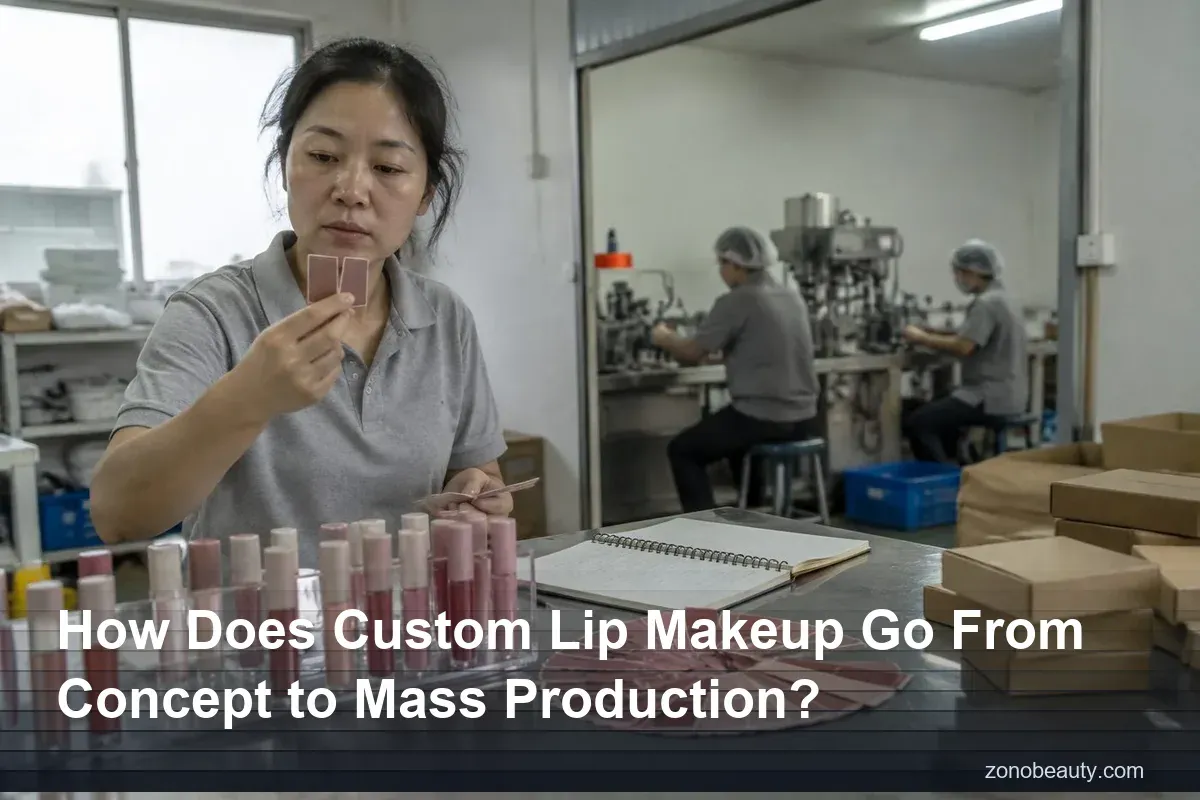
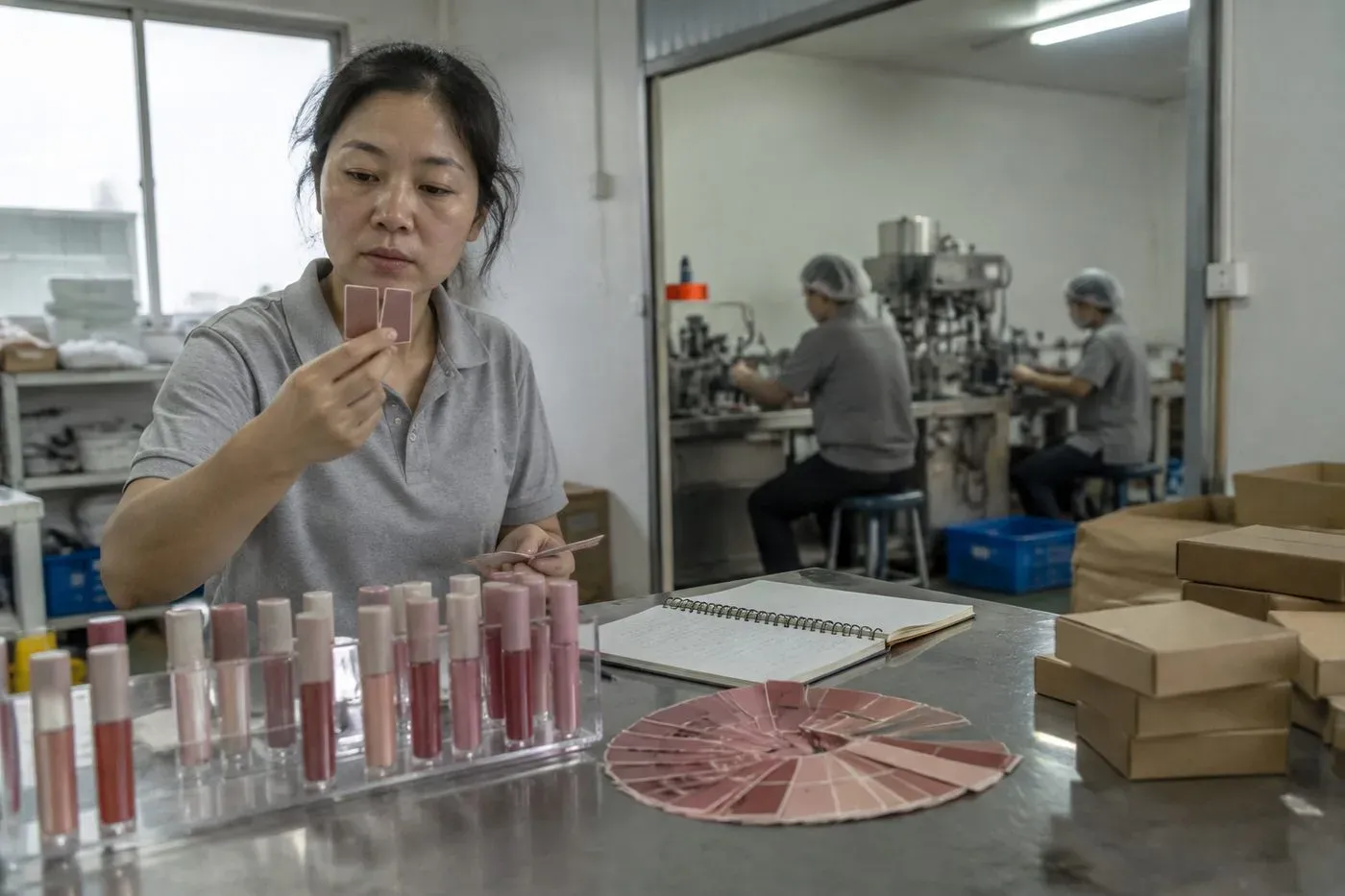
Custom lip makeup looks simple until sampling starts safety assessment 1. I've watched promising briefs stall for months, which is why our coordination team maps every stage before a partner factory touches wax.
Custom lip makeup moves from concept to mass production through seven stages: a technical brief, cosmetic formulation and color matching, sampling and revisions, packaging compatibility checks, stability testing and compliance review, bulk manufacturing with filling and assembly, and final quality inspection before shipment.
Each stage exists to reduce a specific risk. Sampling reduces formula risk. Compatibility checks reduce packaging risk. Stability testing 2 reduces shelf-life risk. Inspection reduces launch risk. Below, I walk through the full pipeline stage by stage, with the deliverable and the decision you need to make at each point.
How do I turn my custom lip makeup concept into a working sample before committing to bulk production?
Last spring, a US founder sent me three Instagram screenshots and called them her formula brief. We spent two calls turning those images into something a lab could act on.
Turn your custom lip makeup concept into a working sample by writing a technical brief covering shade, finish, texture, and packaging, then requesting lab prototypes from a matched partner factory. Expect several revision rounds for color matching and feel before approving a final control sample.
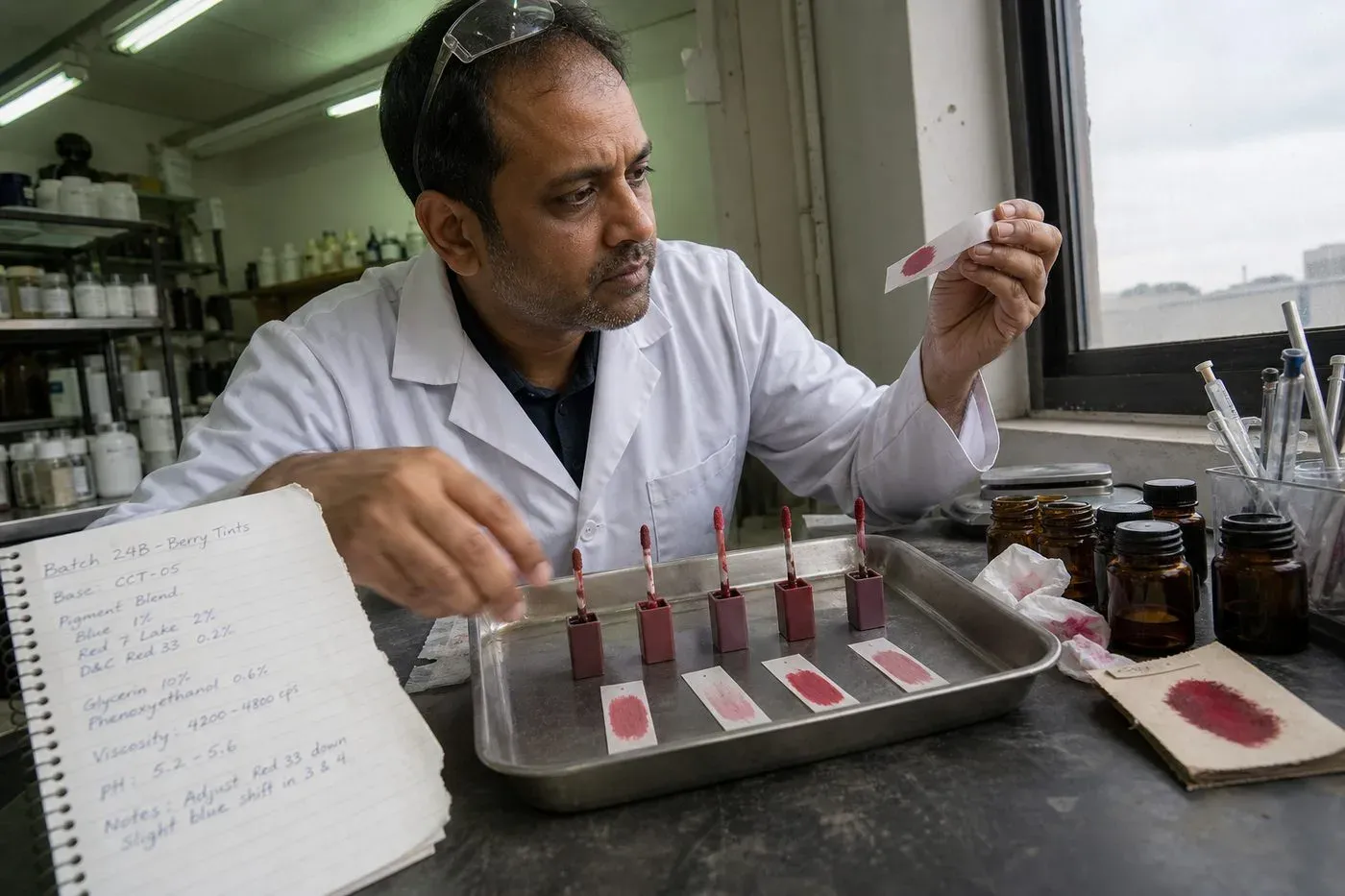
A screenshot tells a lab almost nothing. The same berry shade reads differently on a screen, on a swatch card, and on lips. So the first real deliverable is not a sample. It is a technical brief.
From Vision to Technical Brief
When I run brief intake for lip oil, lip gloss, or lip tint projects, I push for six things: a physical shade reference or existing product to match, the finish (glossy, satin, sheer tint), the texture and slip you want, wear expectations, a packaging direction, and a cost target for your market. Reference products matter more than adjectives. "Juicy but not sticky" means ten different things to ten chemists.
Semi-Custom or Fully Custom?
Before product prototyping starts, you face your first real decision. This choice drives cost, timeline, and MOQ more than anything else.
Factor | Semi-custom (existing base) | Fully custom formulation |
|---|---|---|
Starting point | Proven partner-factory base formula | Blank-slate lab development |
Revision rounds | Fewer; mostly shade and finish tweaks | More; texture, pigment load, wear all iterate |
Timeline direction | Shorter — typically weeks | Longer — often months |
Development cost | Lower | Higher, with more lab hours |
Best fit | First launches, private label manufacturing speed | Signature hero products with unique claims |
The Sampling Loop
Once the brief is matched to the right lab, prototypes come back for evaluation. You give structured feedback on color accuracy, payoff, scent, and feel, and the lab revises. Most projects need more than one round; that is normal, not a red flag. Sample fees and included revision rounds vary, so I always confirm them against the specific project scope before work begins. The stage ends when you sign off a control sample — the physical standard everything downstream gets measured against.
✔ Most custom lip formulas need multiple sampling rounds before final approval TrueColor, texture, scent, and wear each need separate feedback and adjustment, so a first prototype almost never becomes the approved control sample without revision.✘ A Pantone code alone guarantees an exact shade match in a lip product FalsePigments behave differently inside a wax-and-oil base than on printed paper, so accurate color matching requires physical references and lab iteration, not just a color code.
What steps and timeline should I expect when moving my lip product from formula development to mass production?
Every timeline conversation involves the same trade-off: launch speed versus stability testing depth. Compressing testing saves weeks on paper and often costs a full production run in practice.
Expect a staged path: brief intake, formula development, sampling rounds, packaging compatibility checks, stability testing, compliance documentation, then bulk production and inspection. Fully custom projects take months, not days; semi-custom builds on existing bases move faster. Exact lead times depend on your specific project scope.
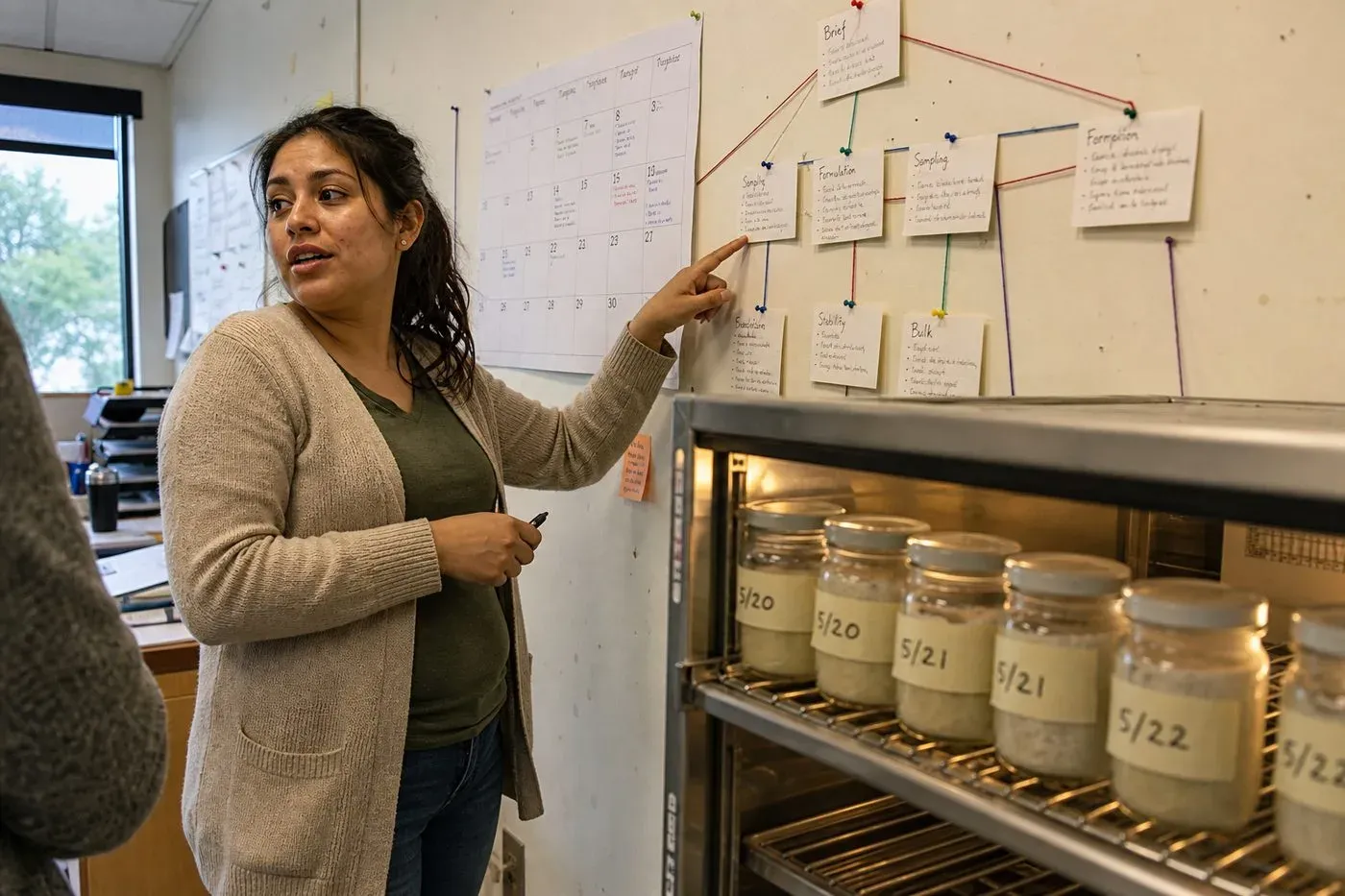
Some suppliers pitch this process as fast and frictionless. I understand why — speed sells. But in the projects I coordinate across the US, Europe, the Middle East, and South Asia, the honest picture is a sequence where certain stages simply cannot be compressed. Stability testing needs its full window. Sample feedback needs your real attention. Here is the pipeline as I actually manage it, with the deliverable and your decision at each stage.
Stage | Key deliverable | Your decision | Indicative duration |
|---|---|---|---|
Brief intake and supplier matching | Confirmed brief, matched partner factory | Approve brief and cost target | a few days |
Cosmetic formulation and color matching | First lab prototypes | Give structured shade and texture feedback | a few weeks |
Sampling revisions | Approved control sample | Sign off color, feel, and scent | one to several rounds |
Packaging compatibility checks | Formula validated in your exact tube and wand | Confirm final components | a few weeks |
Stability testing and documentation | Test reports, available upon request | Confirm labeling with your responsible person | several weeks |
Bulk production | Finished goods with batch records | Approve pre-production sample | several weeks |
Inspection and shipment | Inspection report, export documents | Release the shipment | a few days |
Exact durations, MOQ, and pricing are always confirmed against the specific scope, because a two-shade lip oil in a stock tube and a twelve-shade tint line in custom packaging are different projects. Delays usually come from three places: slow feedback on samples, packaging component lead times running behind the formula, and ingredient sourcing for unusual actives or pigments. A stability failure — sweating, separation, or shade shift under heat or freeze-thaw cycles — forces rework and restarts the clock. That is exactly why the testing window exists.
✔ Stability testing exposes lip formulas to heat, freeze-thaw cycles, and light before bulk production TrueAccelerated conditions reveal separation, sweating, and shade drift early, so defects surface in the lab instead of in a customer's shipment.✘ Once the sample is approved, bulk production can start the next day FalseStability windows, packaging component procurement, and ingredient sourcing still need to complete after sample approval, so production scheduling follows those milestones.
How do I choose a reliable OEM/ODM partner in China for my custom lip makeup line?
A UK sourcing manager once showed me five lip gloss quotes that varied wildly for the same product. Each supplier had quietly assumed a different formula grade and packaging spec.
Choose a reliable OEM/ODM partner for custom lip makeup by verifying partner-factory documentation, checking real project experience in your target market, testing communication during sampling, and confirming how they handle quality inspection, export paperwork, and formula-to-packaging compatibility before you commit.
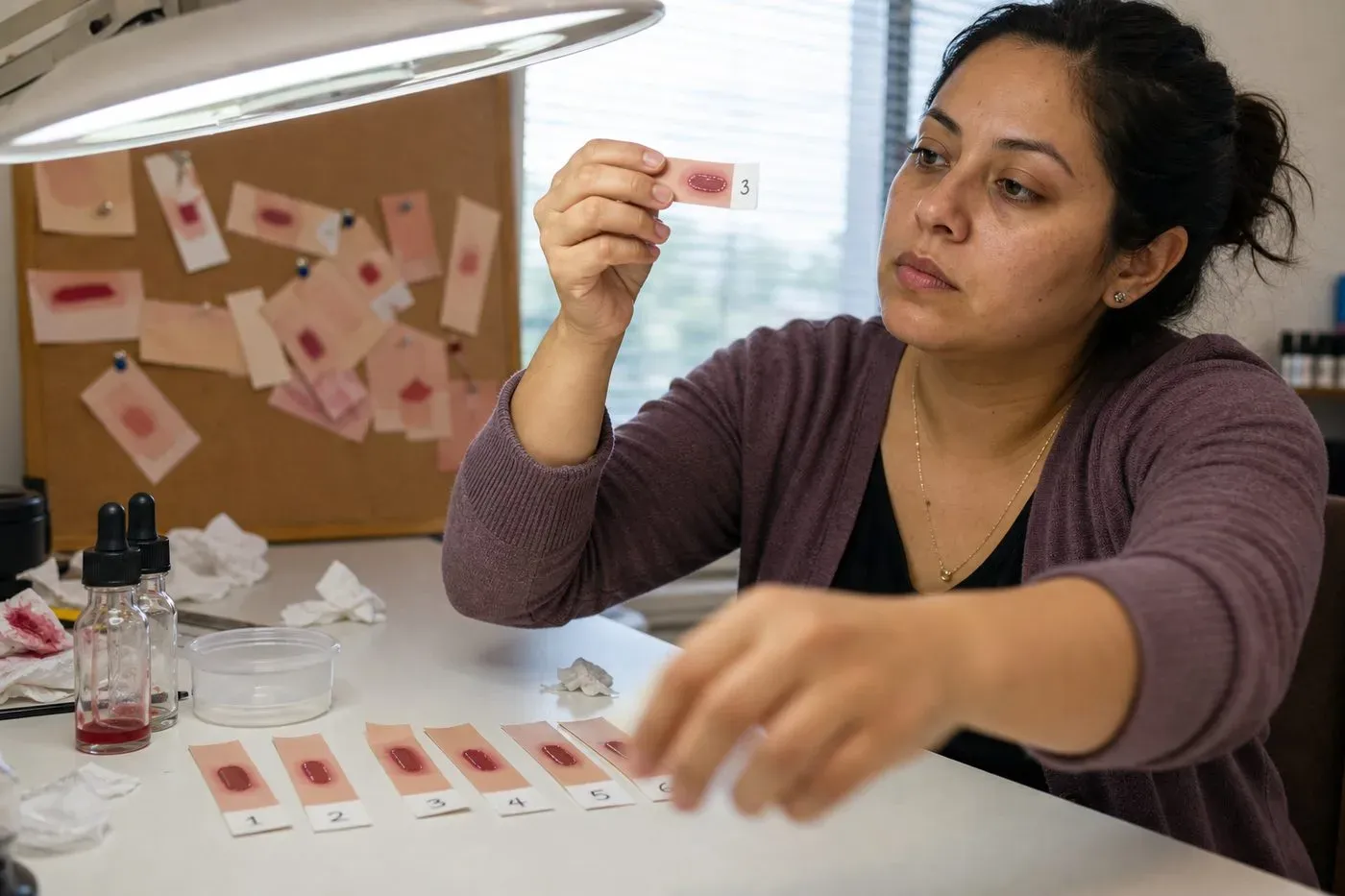
Quotes that differ wildly are rarely about greed. They are about assumptions. Until the formula grade, packaging spec, and testing scope are pinned down, every contract manufacturing quote is comparing a different product. So my first advice is structural: understand which supplier model you are actually talking to.
Three Supplier Models, Three Trade-Offs
Model | Strength | Watch-out | Fits best when |
|---|---|---|---|
Factory-direct | Deep control of one production line | Narrow range; may push their catalog over your brief | Your product matches their exact specialty |
General trading company | Wide catalog, low friction | Thin technical depth; weak follow-up when production drifts | Simple restock buying, minimal customization |
Coordination partner | Matches each project to the right factory; one window from sampling to shipment | Not the cheapest quote in the stack | Multi-product lines, custom development, scaling brands |
I'll be transparent about where we sit. Our team at ZONO does not own a manufacturing site. We coordinate custom lip makeup projects through vetted partner factories, matching each brief by formula, packaging, MOQ, budget, and target market — and we explain why a quote lands where it does. That model suits brands building for the long term more than buyers chasing one-off price wins.
Verify Before You Commit
Whatever model you choose, verify the same things. Ask for partner-factory certifications and test reports; these should be available upon request, never vague promises. Ask how many sample rounds are included, whether the formula is tested in your chosen packaging, and what happens if bulk drifts from the sample. And be clear on compliance: FDA regulatory compliance 3 in the US and safety assessment in the EU or UK remain the responsibility of the brand owner or the appointed responsible person in the target market. No factory or agent can honestly claim a lip product is "FDA approved" — the FDA does not approve cosmetics that way, and any supplier who says otherwise has told you something important about their reliability.
How can I make sure my bulk lip makeup order actually matches the approved sample in color, texture, and packaging?
Years ago, an early lip tint order taught me a hard lesson: the bulk shade drifted warmer than the approved sample because nobody had sealed a signed control standard.
Ensure your bulk lip makeup order matches the approved sample by locking a signed golden sample, requiring pre-production and first-batch confirmation, defining tolerances for shade, texture, and fill weight, and arranging quality inspection against that standard before the shipment is released.
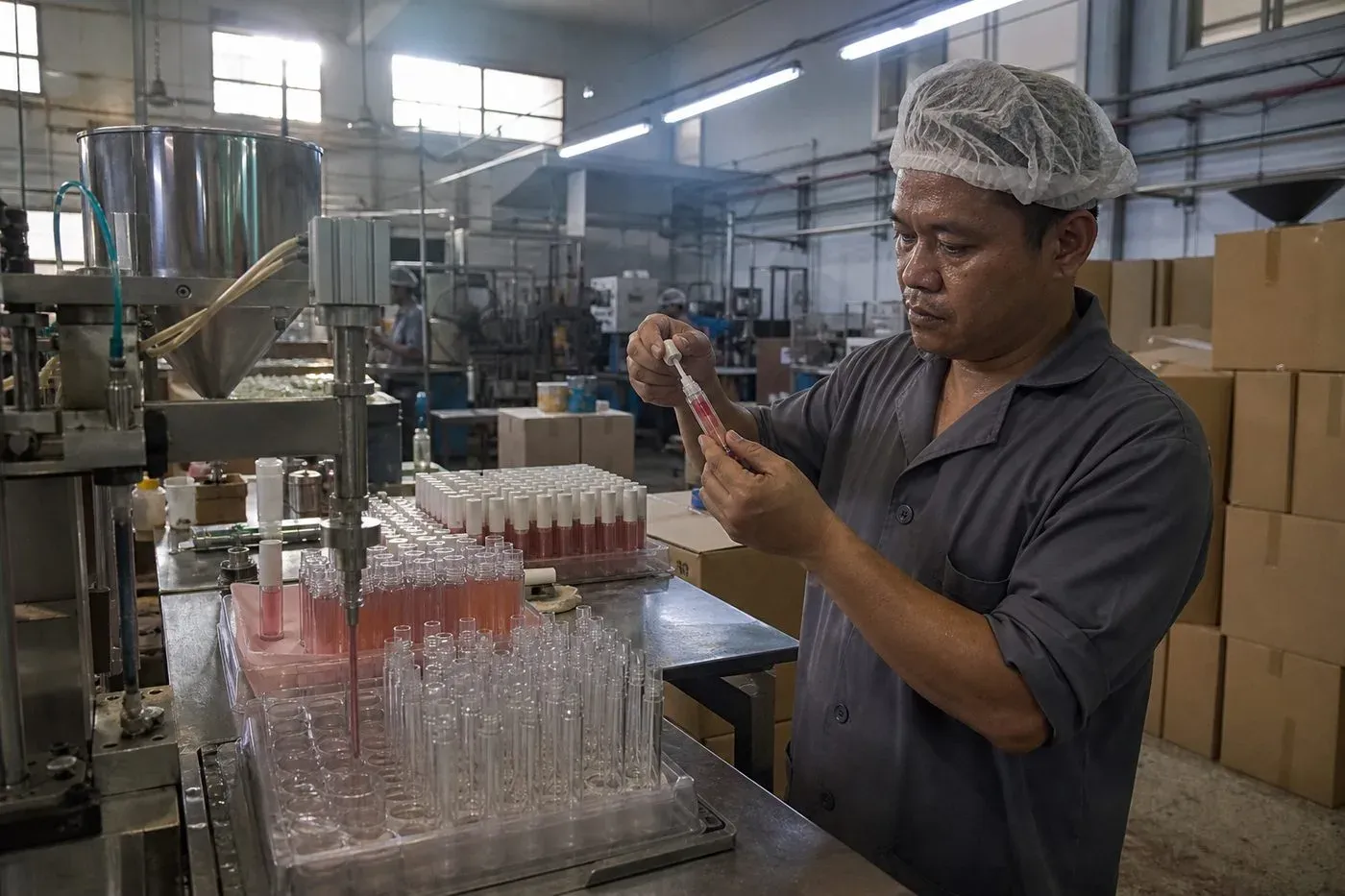
Drift between sample and bulk is rarely sabotage. It is physics and process. Lab batches are small and gentle; bulk batches involve large-scale heating, mixing, de-aeration, and high-speed filling and assembly. Pouring temperature, pigment dispersion 4, cooling rates, and even a new lot of packaging components can each nudge the result. The fix is not hope. It is checkpoints.
The Five Checkpoints I Run on Every Order
- Seal the golden sample. The approved control sample is signed, dated, and retained in duplicate — one with you, one held for the production side. Every later check compares against it.
- Approve a pre-production sample. Before the full run, a sample made with production-intent materials and components confirms the recipe scales. You sign off before filling starts.
- Check the first batch off the line. Early units from actual filling and assembly get compared against the golden sample for shade, texture, fill weight, and closure fit, while corrections are still cheap.
- Keep batch records and retained samples. Batch testing, batch codes, and retained units give traceability if any question comes up after delivery, and support the documentation your market requires.
- Inspect before release. A final quality inspection covers appearance, shade consistency across cartons, packaging function, and labeling, with the report available upon request before goods ship.
Define tolerances in writing up front — how much shade variance is acceptable, what fill-weight range passes, which packaging defects are rejectable. Vague standards produce vague outcomes. Precise standards, checked at the right moments, are what keep unit ten thousand looking like the sample you approved.
✔ Shade drift between sample and bulk usually comes from process variables, not a changed formula TruePouring temperature, pigment dispersion, cooling rate, and component lot changes can all shift the finished look even when the recipe is identical.✘ A final inspection before shipment is enough to guarantee bulk matches the sample FalseBy final inspection the goods are already made, so it can only detect problems; pre-production and first-batch checkpoints are what actually prevent them.
Conclusion
Custom lip makeup reaches mass production only after formula, shade, packaging, and compliance prove they work together at scale. Skip a stage, and the defect usually surfaces after payment.
Ready to start? Send me your project brief — product type, target market, shade count, packaging direction, expected quantity, and reference products — and I'll map your matched development path.
Footnotes
1. Updated official EU Commission portal for cosmetics legislation and safety assessment requirements. ↩︎
2. ISO is the global authority for manufacturing standards, including cosmetic stability testing protocols. ↩︎
3. Official US government resource for cosmetic regulations, safety standards, and industry compliance requirements. ↩︎
4. Scientific explanation of how pigments are distributed within a base, affecting color consistency in manufacturing. ↩︎