Sep 25, 2026Startup & Private Label Guides
How to Pick the Right Base From a Factory's Lip Makeup Formula Library?
Write an end-use brief first — hero finish, shine level, pigment load, tack, wear time, and target climate — then ask the factory to shortlist only formula
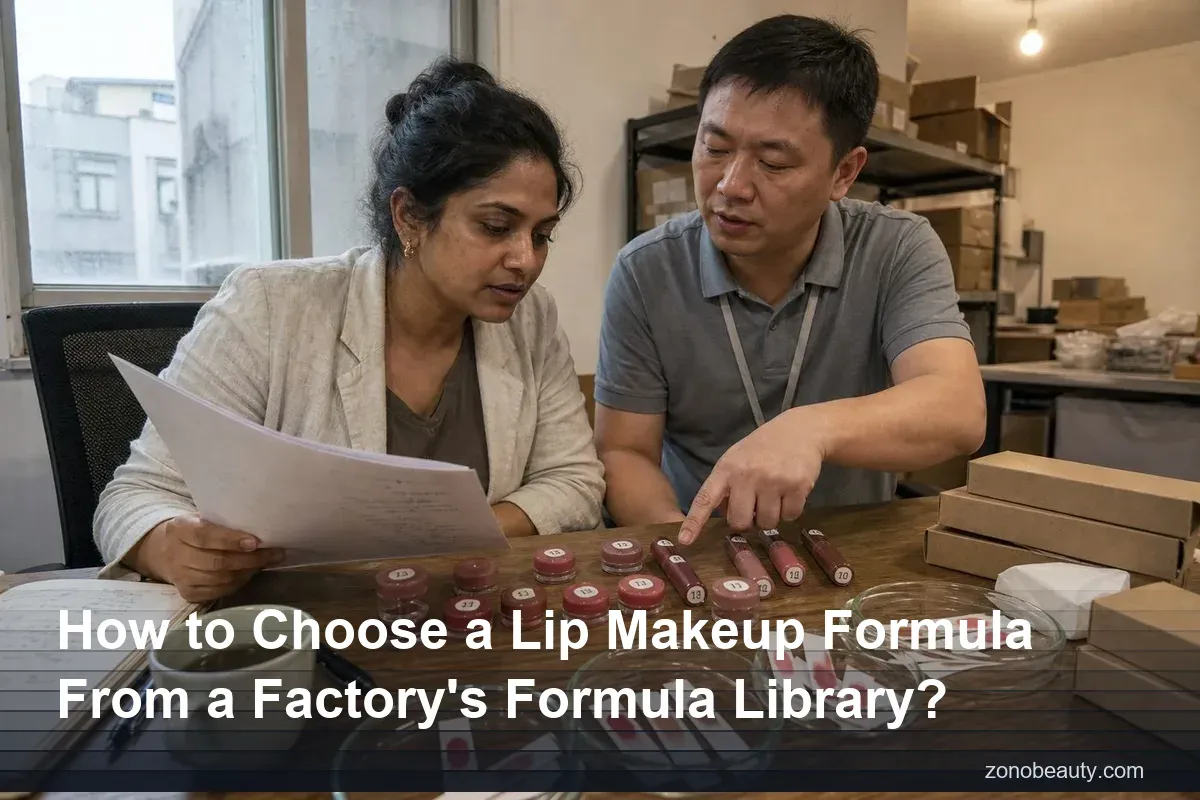
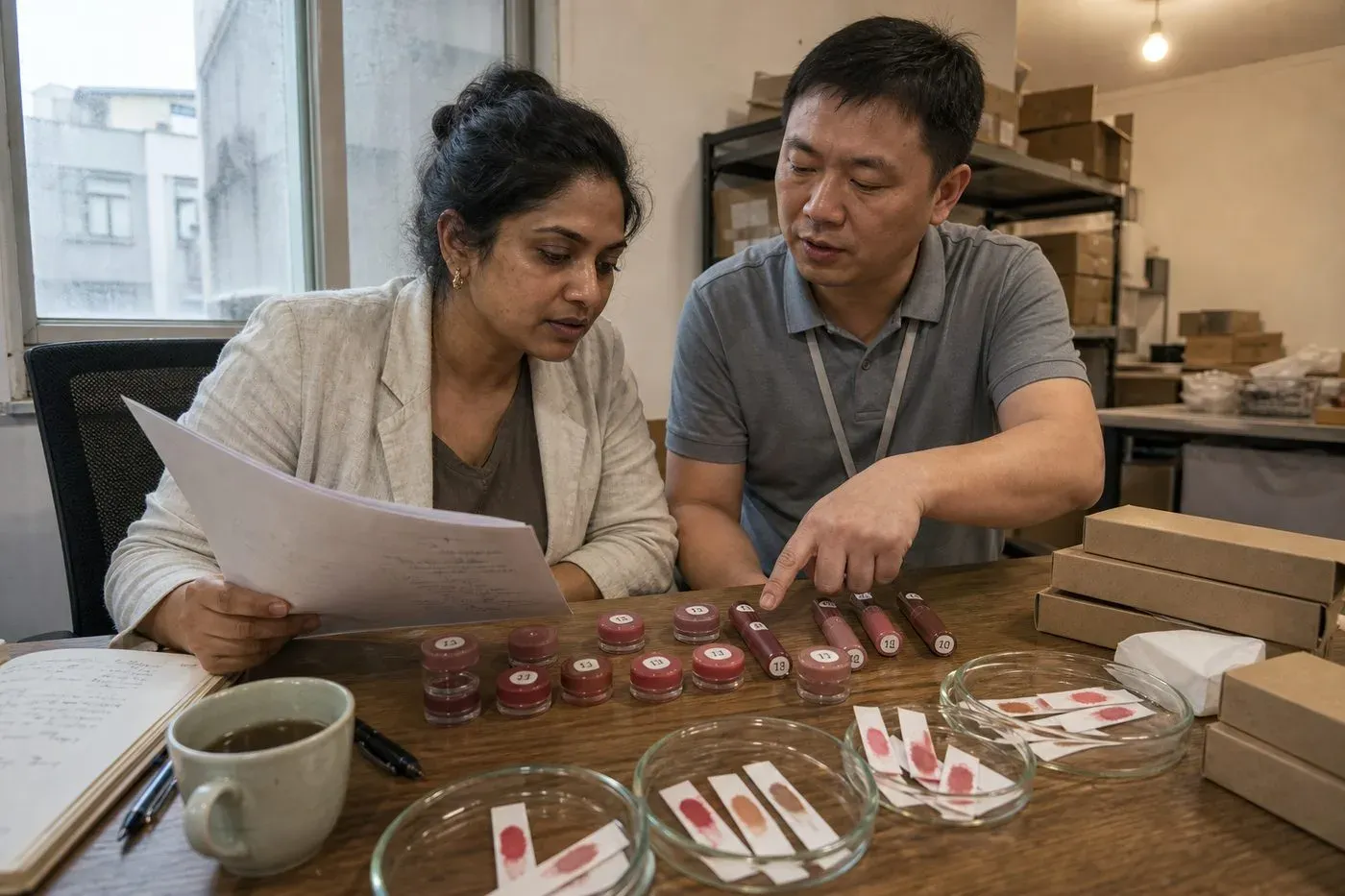
Picking a lip makeup formula from a factory library looks easy until samples arrive. Coordinating lip projects through partner factories, I watch buyers choose by shade — then regret it.
Choose a lip makeup formula by matching the base architecture — finish, texture, wear time, and climate tolerance — to your brand brief first, then filter by ingredient documentation, pricing structure, and MOQ. Confirm shade adjustments last, because factories can tune color far more easily than texture.
A formula library is a menu of pre-built, pre-tested bases. Your job is not to find the prettiest swatch. Your job is to find the base whose behavior matches your product promise. Below is the method I use when I shortlist library formulas for overseas brands.
How do I know which formula in a factory's library actually fits my brand's texture and finish goals?
A UK founder once sent me a lipstick shade photo and asked for exactly this. The shade was easy. The satin finish behind it took three sampling rounds to match.
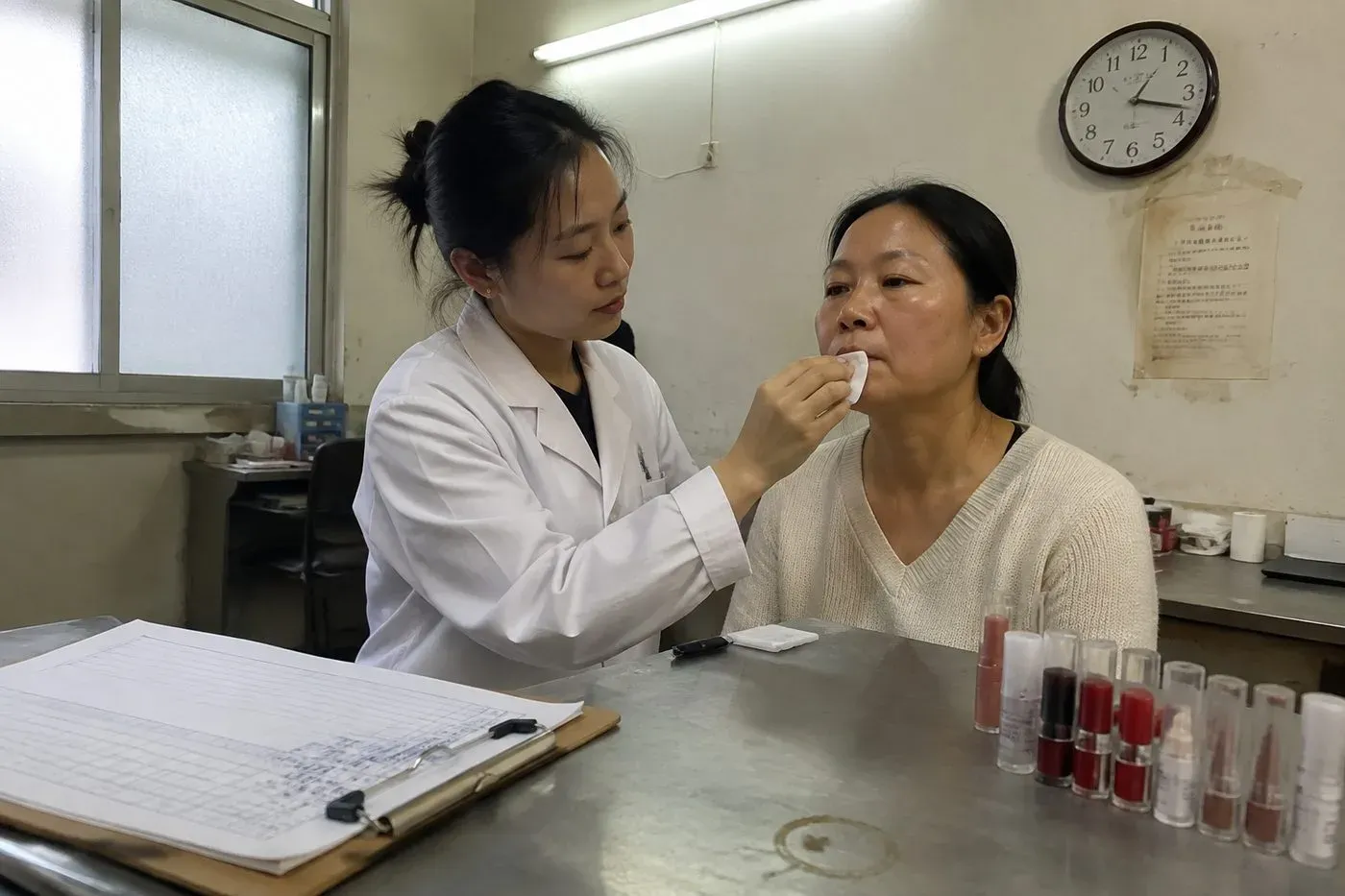
Write an end-use brief first — hero finish, shine level, pigment load, tack, wear time, and target climate — then ask the factory to shortlist only formula families built for that profile. Judge candidates through lip wear tests of four to eight hours, not hand swatches.
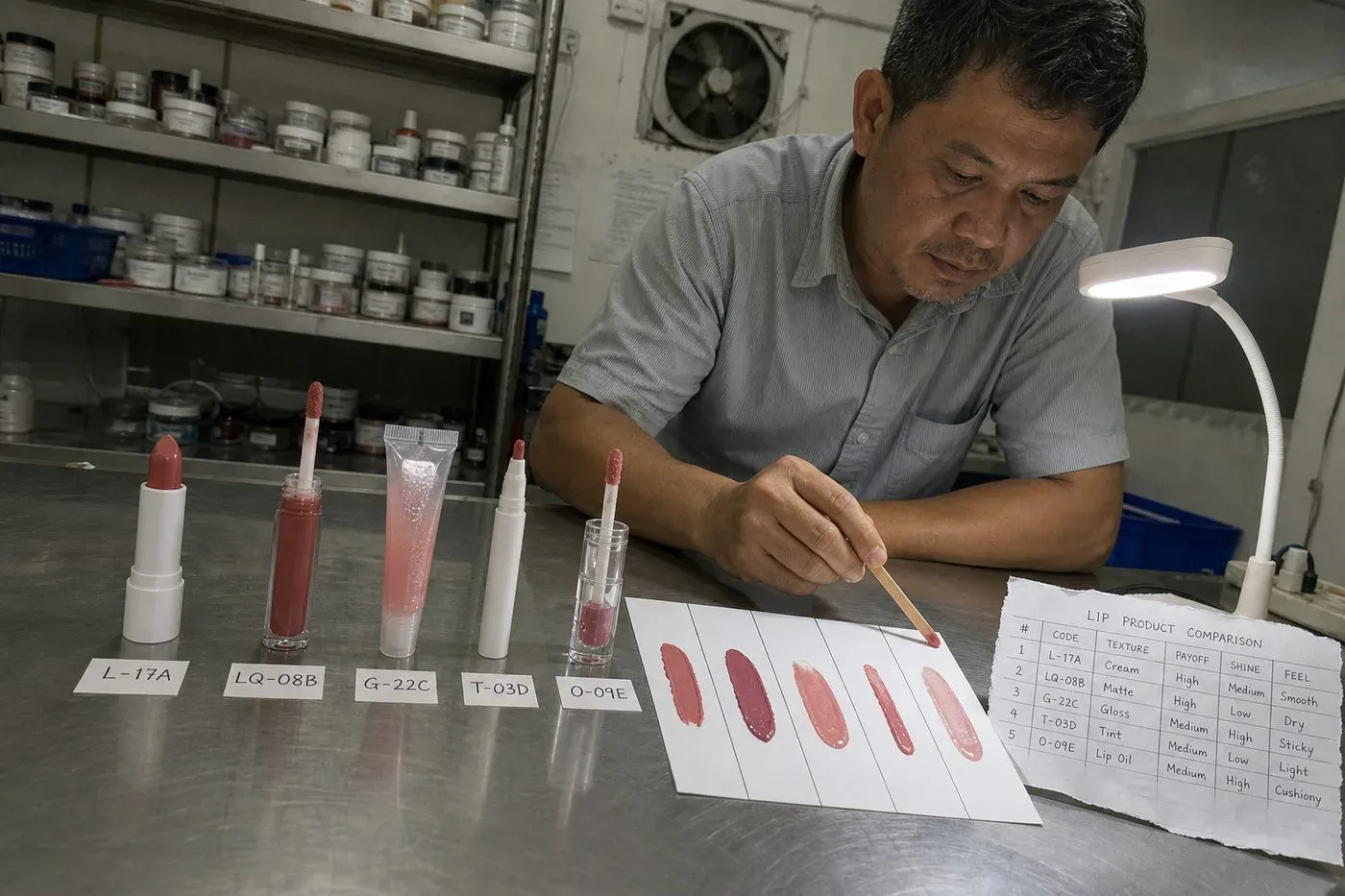
Finish is not just matte versus glossy. In practice, finish is judged on two axes: shine level and pigment level. That is why a matte and a satin can use similar pigments but sit on completely different bases. Matte effects usually come from wax and filler systems. High shine comes from high-refractive-index oils. If you brief only "a nude matte," the factory cannot tell whether you want a velvet blur or a full transfer-proof film. Those are different families.
Know the formula families before you shortlist
Formula family | Typical base architecture | Finish and feel | Choose it when |
|---|---|---|---|
Bullet lipstick | Wax-oil-pigment balance | Classic color, balanced comfort | You want broad appeal and easy application |
Matte liquid lipstick | Film-formers, volatile carriers | High opacity, long wear, drier feel | Wear time and bold color payoff lead the brief |
Lip gloss | Thickened high-shine oils | Plush shine, lower color commitment | Shine and texture are the hero claims |
Lip tint | Stain-forming dye systems | Lightweight, lasting color, low shine | You want a natural, low-maintenance look |
Lip oil / hybrid | Cushioning oils plus light color | Comfort-first, modern glassy finish | Care positioning matters as much as color |
Test the way a consumer wears it
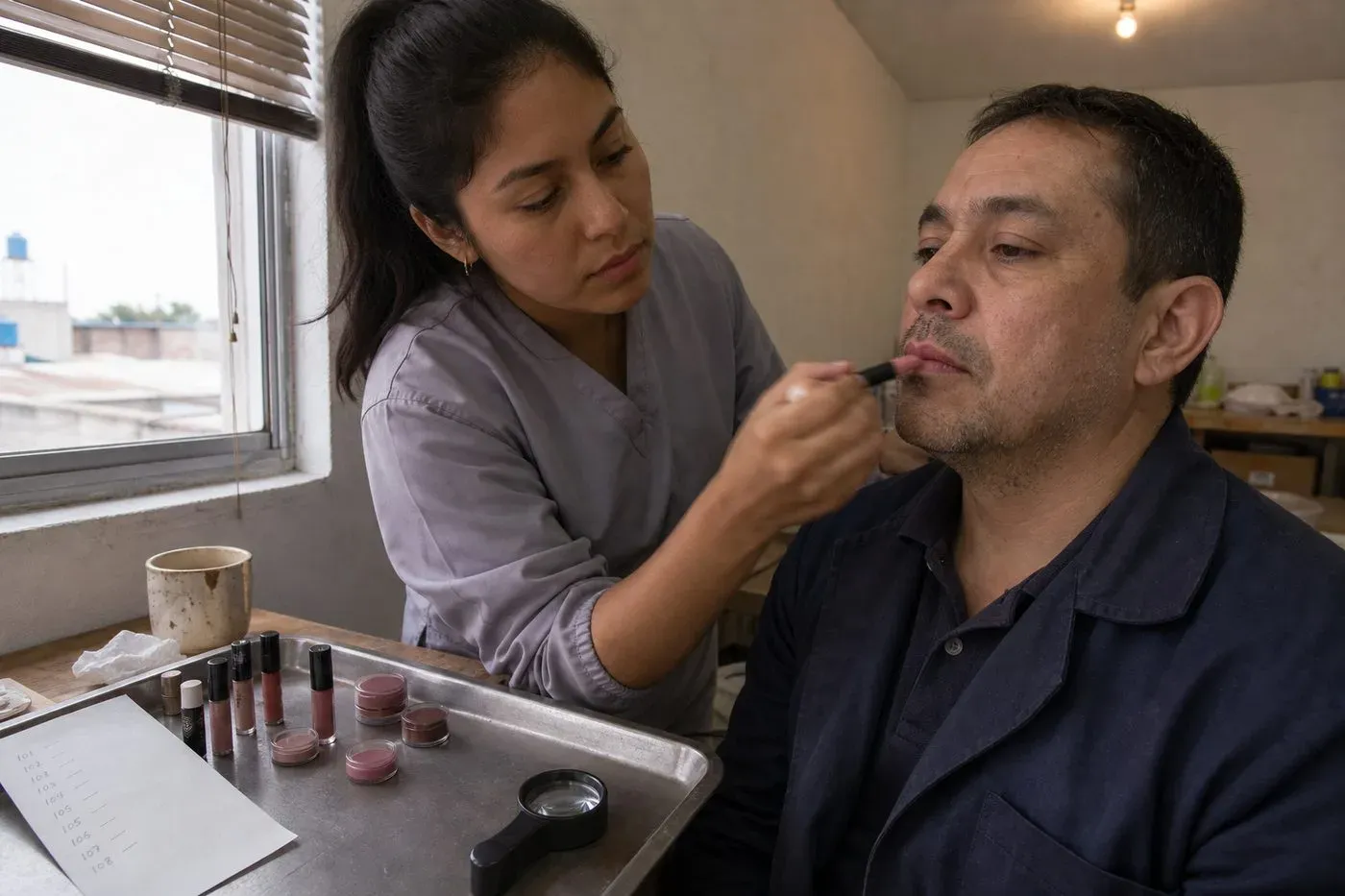
When I run sampling rounds with partner factories, I use a simple sequence. First, swatch on the lip edge and check color payoff in natural light. Second, wear the sample for four to eight hours and watch for feathering, bleeding, and settling into lip lines. Third, blot and observe how the texture recovers. Fourth, note tack, glide, and afterfeel. Lips sit at roughly 36–37°C, so a formula must stay stable at body temperature while still flowing during application. Gloss depends heavily on thixotropic behavior 1 — texture and viscosity that look identical in the jar can behave very differently on lips. That is exactly why hand swatches mislead. There is also a real trade-off to accept here: comfort-first bases with richer oils tend to migrate sooner, while long-wear mattes can drag or emphasize lip texture. Neither is superior. The right pick is the one that matches your product promise, and your brief should state which side of that trade-off wins.
✔ Matte and satin finishes can use similar pigments but require different base architectures TrueFinish comes from the wax, filler, and oil system, not mainly from the pigment. Matte relies on waxes and fillers, while shine comes from high-refractive-index oils.✘ A hand swatch is a reliable way to judge how a lip formula will perform FalseHand skin does not match lip temperature, movement, or moisture. Only a multi-hour lip wear test reveals feathering, transfer, comfort, and how the texture ages.
What should I ask about a formula's ingredients and safety documentation before I commit to it?
A US buyer asked me whether a gloss base was FDA approved. I had to slow the call down, because that phrase signals a misunderstanding that can sink a launch.
Request the full INCI ingredient list, colorant lip-use status, preservative system details, stability and challenge test summaries, and partner-factory GMP or ISO documentation — all available upon request. Then verify everything against your market's rules, because regulatory responsibility stays with the brand owner.

Let me be direct about the compliance point first, because it protects you. The FDA does not approve cosmetic products 2 or formulas in the way that phrase implies, and no factory certificate makes a product "EU approved" either. When a supplier claims otherwise, treat it as a warning sign about their documentation discipline. In our coordination work, we frame every document as available upon request and confirmed against the specific project scope, and we state plainly that labeling, safety assessment, and regulatory filing sit with the brand owner or the appointed responsible person in the target market. We do not guarantee compliance on anyone's behalf — no honest coordination partner can.
The document set worth requesting
Document | What it tells you |
|---|---|
Full INCI ingredient list | Whether any ingredient conflicts with your market or brand claims |
Colorant list with lip-use status | Some pigments are approved for external use only, not lips |
Preservative system and challenge test summary | Essential for water-containing tints and liquid formulas |
Heat, cold, light, and packaging-interaction behavior | |
Shelf life evaluation | Supports your period-after-opening and expiry labeling |
Partner-factory GMP / ISO documentation | Shows the site's quality system, not market approval |
Filters that remove formulas early
Some screens should run before you fall in love with a texture. If your positioning is vegan, ask whether the base contains beeswax, lanolin, or carmine — replacing them shifts wax structure and melt behavior, which may push you into a different library tier. Anhydrous bases such as bullet lipsticks and balms carry a lighter preservation burden than water-containing tints, which is one reason I often steer humid-market projects toward water-free systems. And if you plan to sell in the EU or UK long term, ask whether the formula avoids microplastics and specific PFAS film-formers, because regulatory direction is moving against them.
✔ Water-containing lip formulas need validated preservation and microbial testing, while anhydrous bases carry a lighter burden TrueWater supports microbial growth, so aqueous tints require a proven preservative system and challenge testing. Anhydrous lipsticks and balms face far lower microbial risk.✘ A factory's GMP or ISO certificate means the formula is approved for sale in my market FalseThose certificates describe the site's quality management system. Market compliance, safety assessment, and labeling remain the responsibility of the brand owner or responsible person.
How do I compare pricing and MOQ across different formulas in the same library?
Two matte liquid bases can carry different quotes in the same library. When I walk buyers through partner-factory pricing, pigment concentration and grade usually explain most of the gap.
Compare formulas on cost per unit at your realistic order quantity, not headline price. Ask each factory to break out base cost, pigment load, packaging compatibility, and MOQ per shade versus per formula. Exact MOQ, pricing, and sample fees are always confirmed against project scope.
Price differences inside one library are rarely random. In contract manufacturing, a quote reflects the ingredient tier, the pigment system, and how much validation work is already amortized into that base. A formula with high pigment concentration and premium cushioning oils will quote above a simpler base even at identical finish. A hybrid base carrying hyaluronic acid 4 or ceramides costs more again. None of that is visible in a swatch photo, which is why I always ask partner factories to explain what moves the number.
The drivers behind quote and MOQ gaps
Driver | Why it changes across formulas | What to ask |
|---|---|---|
Pigment concentration and grade | Higher loads and lip-grade pigments raise raw cost | What pigment level supports my shade range? |
Ingredient tier | Actives and specialty oils sit in premium tiers | Which claims does this tier actually support? |
MOQ structure | Some quote MOQ per shade, some per formula | Is my multi-shade launch counted per color? |
Packaging compatibility | Viscosity may require specific tubes or wands | Which stock packaging fills cleanly with this base? |
Validation already completed | Tested, stabilized bases carry lower project risk | Which stability tests are already on file? |
One caution from the private label cosmetics side: the cheapest base in a library is sometimes the least validated one. If product stability testing or packaging-interaction checks are incomplete, you inherit that work and its risk. A slightly higher unit cost on a proven base often beats a bargain that fails at bulk. MOQ requirements also behave differently per shade versus per formula — a per-formula MOQ split across many shades can quietly multiply your real commitment. We break these numbers out in every project comparison, and we confirm exact MOQ, pricing, and sample fees against the specific scope before anyone signs off.
Can I customize an existing formula, or do I need to start a new development from scratch?
I let a client push a stock gloss base past its viscosity window to fit a narrow wand tube. The bulk separated at inspection. That taught me where tweaking ends.
Yes, most library formulas accept adjustments to shade, fragrance, shine level, and moderate viscosity without new development. Changes to wax structure, pigment system, preservation, or core actives usually trigger fresh stability testing and behave like custom formulation, so confirm the adjustment boundary before sampling.
Every validated formula has an adjustment window. Inside it, the chemist can tune the product without breaking the stability data behind it. Outside it, you are effectively commissioning custom formulation services, whatever the supplier calls it. The practical skill is learning where that line sits for your candidate base, and asking before sampling rather than after.
What usually stays inside the window
Usually adjustable in a library formula | Usually triggers new development |
|---|---|
Shade and color payoff tuning | Swapping the wax system, such as a vegan conversion |
Fragrance or flavor changes | Changing or adding the preservation system |
Shine level within the same family | Adding water or actives at claim-level percentages |
Moderate viscosity shifts for applicator fit | Structural wax upgrades for refillable packaging |
Fill size and packaging format | Removing PFAS-type film-formers from a long-wear base |
Why the boundary exists
Color is the flexible layer. Texture architecture is not. Factories can usually re-tint a base across a full shade range far more easily than they can change how it melts, films, or flows. Applicator matching is a good example of the middle ground: a liquid lip's thixotropic profile must suit the wand, and shifting from a flock-tip to a silicone paddle sometimes fits inside the window — but only sometimes. Refillable packaging is another: refill cartridges stress the bullet mechanically, so the base may need higher-integrity structural waxes, and that is a rebuild, not a tweak. In our coordination window, we log every requested change, confirm with the partner factory's chemist whether it stays inside the validated range, then re-run formula-to-packaging compatibility checks before bulk. Any change that leaves the window means fresh product stability testing, and your timeline and sample fees shift with it — all confirmed against the project scope.
✔ Shade adjustments are far easier for a factory than texture or base changes TrueRe-tinting works within the formula's validated pigment window, while altering waxes, films, or preservation changes the base architecture and requires new stability work.✘ Small formula tweaks never require repeating stability or compatibility testing FalseEven moderate viscosity or ingredient shifts can change wax crystallization, migration, or packaging interaction, so changes outside the validated window need re-testing before bulk.
Conclusion
Choosing a lip makeup formula means briefing the finish, testing on lips, screening documentation, comparing real per-unit economics, and respecting each base's adjustment window before production.
If you are shortlisting bases now, send me a short project brief — product type, target market, shade count, packaging direction, expected quantity, and reference products — and I will map it against validated options from our partner-factory libraries.
Footnotes
3. ISO 18811 provides guidelines for the stability testing of cosmetic products to ensure quality. ↩︎