ABS vs Acrylic Press On Nails for Retail Buyers
Compare ABS and acrylic press on nail options by exact SKU: what the label covers, firmness on video and sample, and the buying record that keeps a repeat order consistent.
When we coordinate press-on nail programmes for retail buyers, the material label is usually the first question they ask, and it is rarely the one that decides the order.
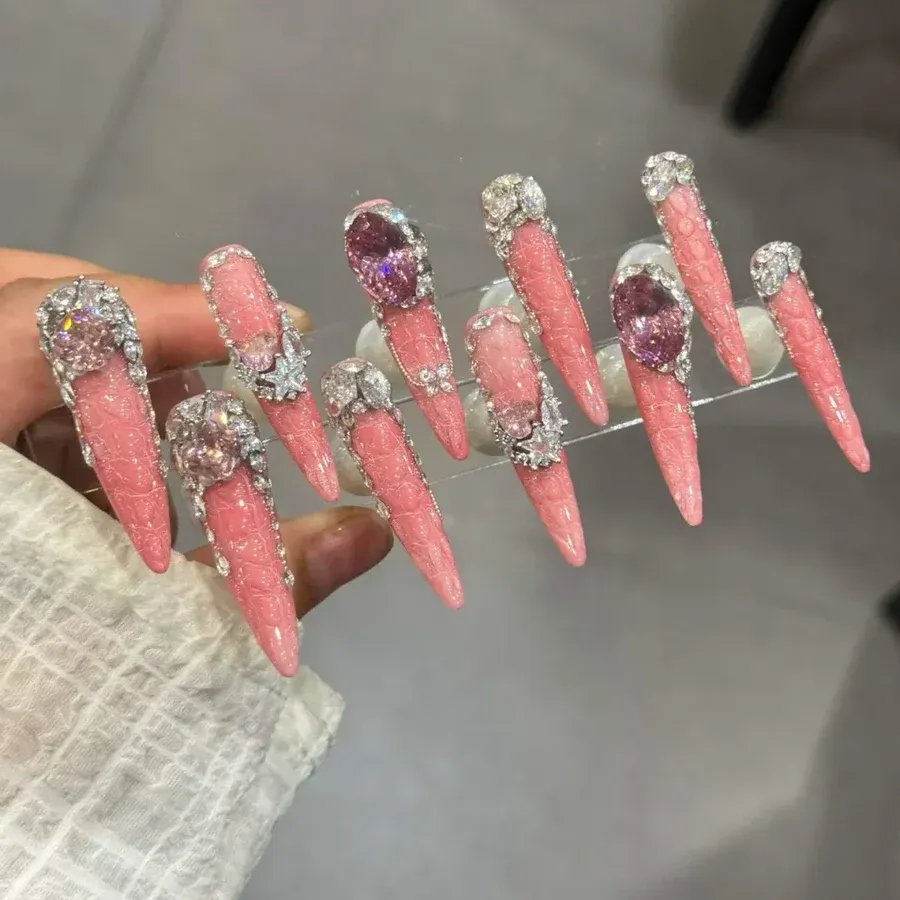
An ABS or acrylic label starts the comparison but never finishes it. Judge the exact SKU: what the description covers, how the finished set feels on video and in hand, and whether the approved sample matches what you intend to reorder.
This guide walks the comparison in the order a buying team actually meets it: the description first, then the video, then the decision about your range, and finally the approval you keep for reorders.
What Does the Material Description Actually Cover?
The label on the listing, the answer in the quotation and the words a supplier uses in chat are often three different sentences; your review notes are where they have to become one.
Ask the supplier to identify the material for each selected SKU and to state what the description covers. A label does not describe every layer or decorative component, so unclear wording should be resolved before it reaches your own product copy.
What often differs in appearance
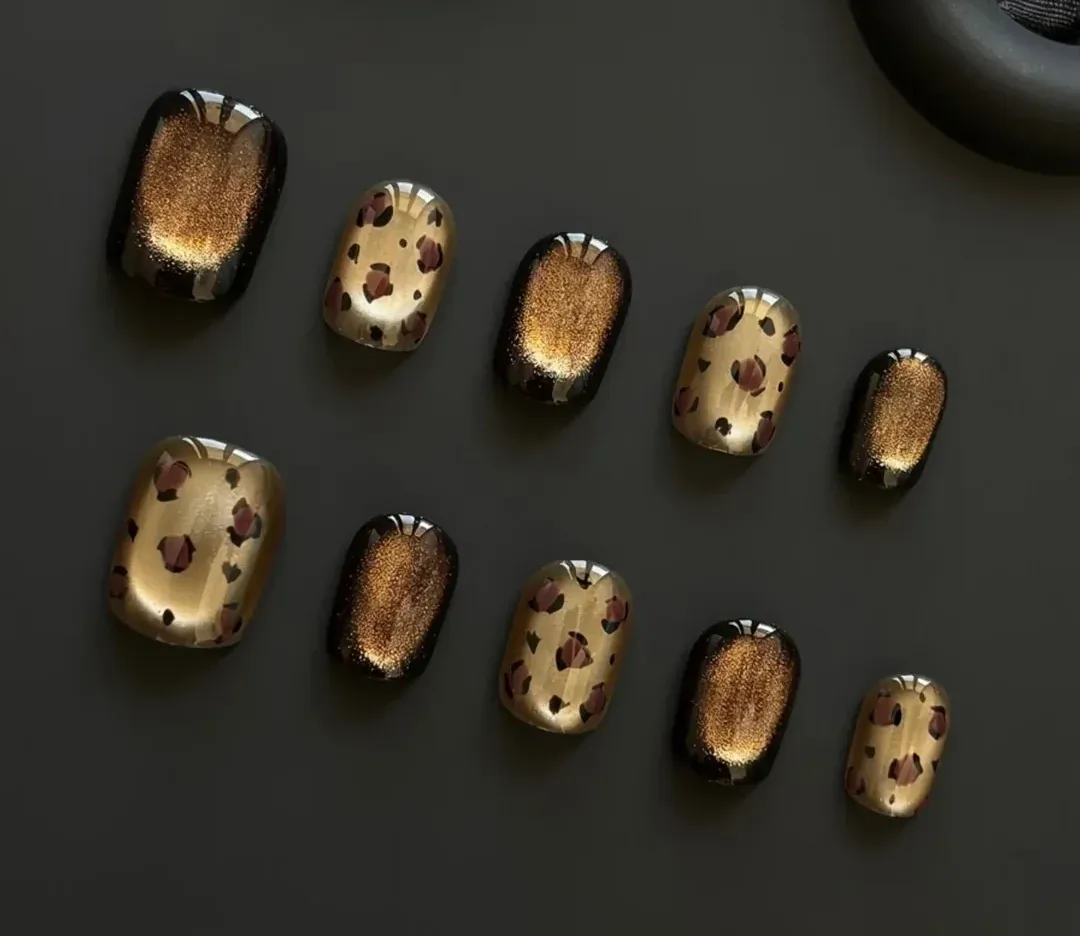
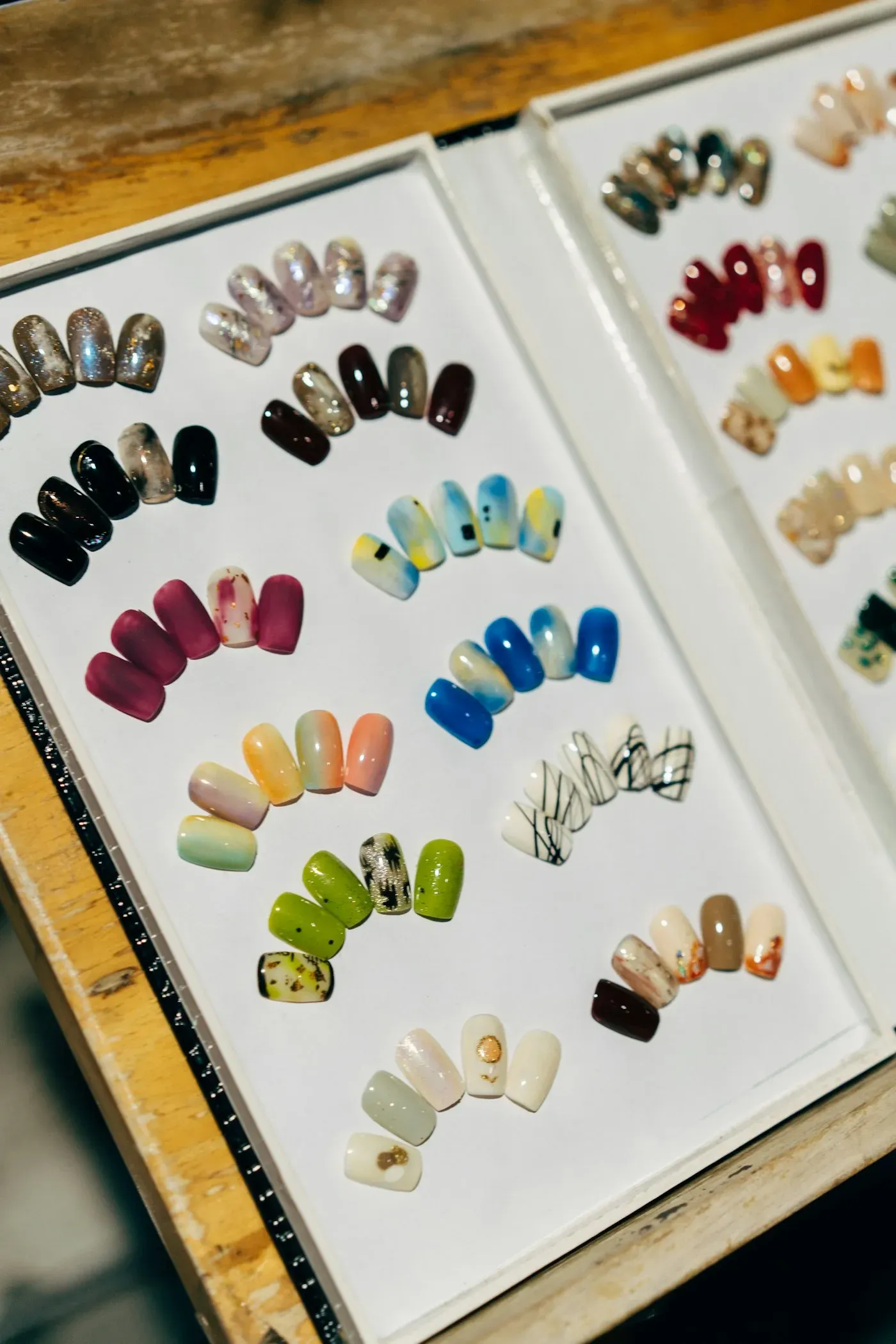
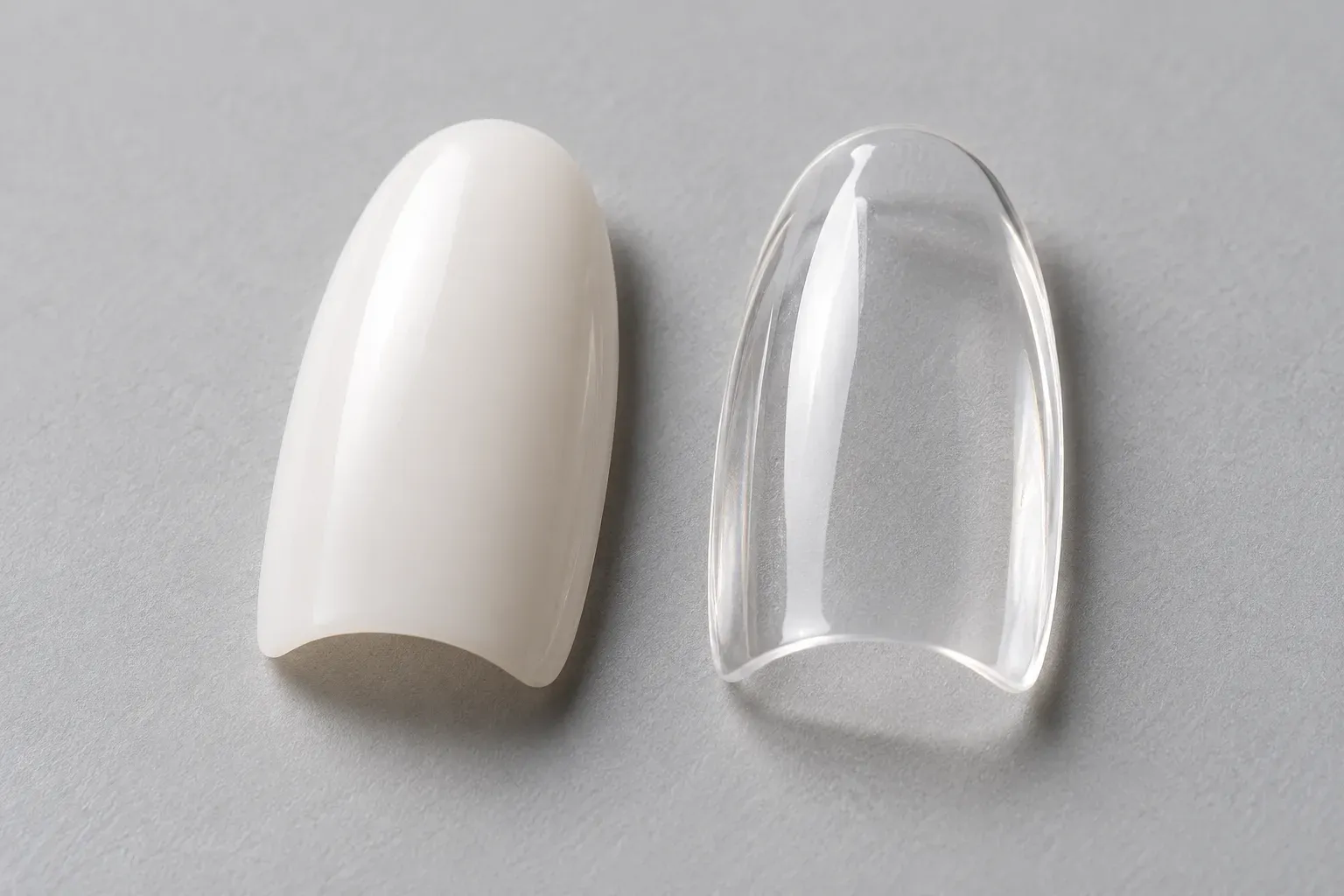
While the supplier's answer is the authority for any specific SKU, the two families often look different in ways you can check on sight. ABS is commonly used in opaque, moulded consumer plastics, so a tip in this family usually reads solid and evenly coloured, with a uniform moulded edge1. Acrylic, better known as acrylic glass or PMMA, is valued for glass-like clarity and gloss, so a tip in this family often looks clearer, shinier and slightly more glassy against the light2. Many press-on products blend acrylic-based systems, so treat these as visual orientation only: an opaque set is not proof of one material, a clear set is not proof of the other, and the supplier's written confirmation for the SKU remains the deciding record.
A short written answer is enough
Both ABS and acrylic belong to wider thermoplastic families used across consumer goods, which is one reason a family name alone says little about a single finished nail. A short written answer is usually all you need. What you want is a statement you can keep next to the SKU, so that the wording you later publish and the wording your supplier stands behind stay the same. When an answer arrives for one style, store it against that style rather than applying it across the range by default. For your assortment, the practical question is whether the selected product meets your brief: a buyer seeking a firm, substantial feel should state that requirement directly, because choosing a material name without describing the desired feel leaves room for different expectations.
| Review-note field | What to enter | Why it matters |
|---|---|---|
| SKU reference | The exact style code from the catalogue | Keeps every later note attached to one product |
| Material as confirmed | The supplier's written answer for this SKU | Stops a family name standing in for a specification |
| Shape and length | Almond, square, long or short, as reviewed | Shape changes how the same material feels |
| Size selection | The size range supplied with the set | Decides how many customers fit the set well |
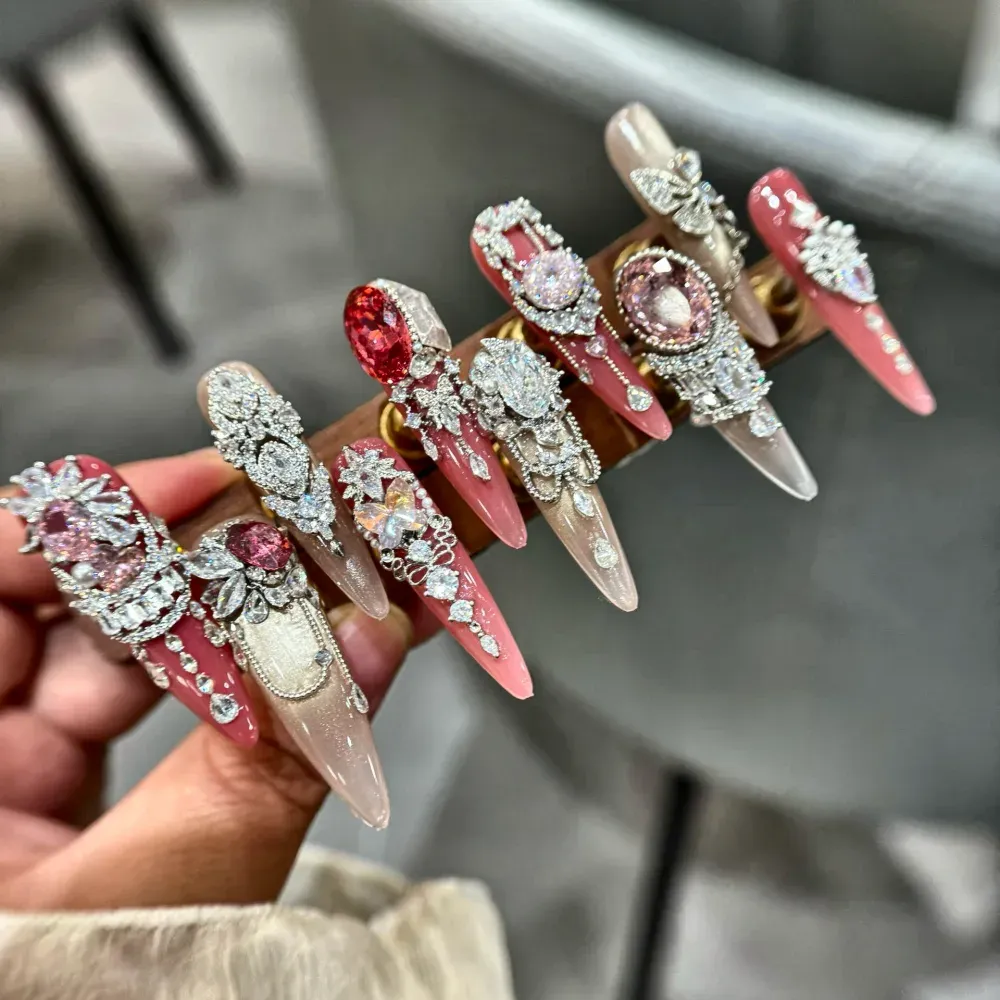
| Finish and decoration | Gloss, matte, printed or attached pieces | This is what your customers actually see |
| Video reference | The clip you reviewed, by file or link | Ties the written record to moving evidence |
| Decision | Approved, clarification needed or not selected | Makes the outcome explicit and dated |
State the feel you want
State the feel you want in plain terms and let the supplier confirm it for the selected SKU. A named requirement turns the material conversation from a vocabulary test into a checkable commitment that both sides can verify again at sample stage and before any repeat order.
How Do You Review Firmness and Flexibility Fairly?
We ask every buyer to treat a bending video as an observation of one item, because that is what it can honestly support.
A finished nail can feel firm in the hand and still show movement when bent. Request a close video of the exact SKU with its reference visible, and treat the demonstration as evidence about that sample, not about the material family.
Compare like with like
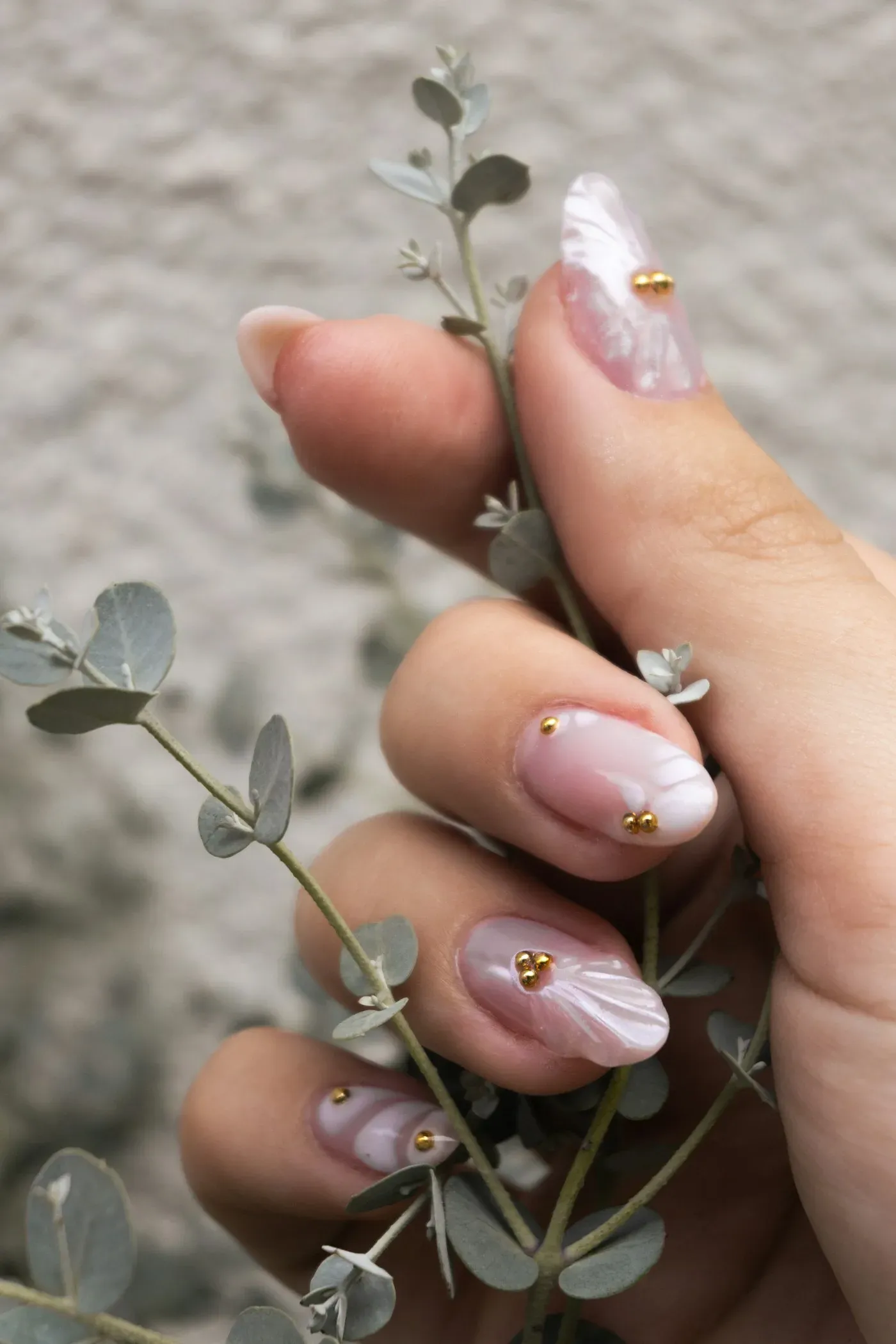
Look at the side profile and the way the sample moves under gentle handling. If you are comparing two options, keep the shape, length and sample size as similar as possible, and note any differences that prevent a direct comparison. That last point matters more than it first appears. A longer tip bends more than a shorter one under the same handling, and a thinner edge can flex where a built-up apex holds firm. If the two items you compare differ in shape or length, record those differences so nobody later mistakes a shape effect for a material effect.
| Check | On the video | On the finished sample |
|---|---|---|
| Side profile | Curvature and tip thickness from the side | Confirm the same profile in hand |
| Surface finish | How the colour catches light as it turns | A consistent lighting check at your desk |
| Decoration | How attached pieces sit and move | How they survived the journey to you |
| Flex under gentle handling | The demonstration on that one item | Your own handling, same method for every SKU |
| Colour and pattern | Compared with the catalogue image | Compared with the approved reference |
Keep durability wording separate
Avoid turning a dramatic bend demonstration into a buying shortcut. It does not establish how long a customer will wear a set, and a firmness preference is not a verified wear life claim. Regulators also shape what your listings can say: United States federal cosmetics regulations sit in Title 21 of the Code of Federal Regulations3, and European Union cosmetic rules sit in Regulation (EC) No 1223/20094, so unproven durability wording carries risk well beyond this first review. Keep any customer-facing durability language separate from this initial product review until it is properly supported.
Should One Style's Result Apply to Your Whole Range?
When we prepare assortments with returning clients, one of the most useful habits is keeping each style's result scoped to that style.
A result from one style describes that style. The next SKU may differ in thickness, construction or finish under the same material name, so each slot in your range earns its own review against its own brief.
Different slots, different briefs
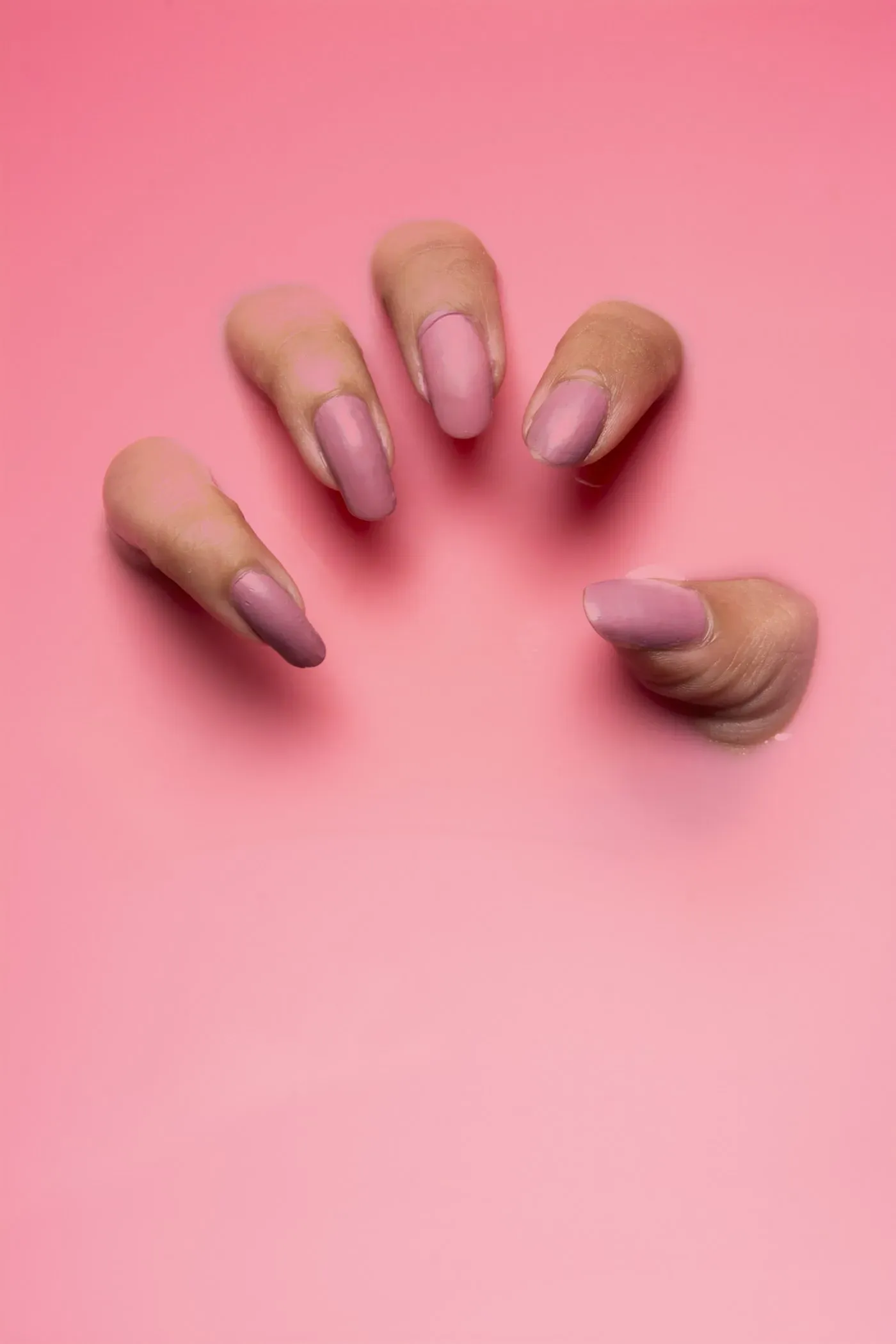
Your assortment can legitimately hold different products for different roles. One slot may call for a light fashion tip, another for a firmer build that survives daily handling on a salon counter. The brief for each slot decides which finished feel fits, and each brief is judged on its own sample. When two candidate styles differ in shape or length, record those differences before comparing them, because a longer tip bends more under the same handling and a comparison that ignores shape reads a shape effect as a material verdict. Scoped notes also protect you in supplier conversations: feedback that refers to one SKU can be acted on precisely, while a comment about your ABS nails in general gives a supplier nothing specific to confirm or correct.
| Stage | What to record | What it protects |
|---|---|---|
| Before dispatch | The exact-SKU video you requested | Stops a general clip standing in for your style |
| On arrival | Parcel photographs and a label check against the list | Pins the review to the right product |
| At decision | The outcome, reason and conditions per SKU | Makes the approval defensible months later |
Feedback a supplier can act on
Notes written per SKU also travel better inside your own team. When two colleagues review the same style weeks apart, a note that pairs the SKU with its shape, length and finish stops the conversation drifting into a general debate about materials that the specific product may not represent. The note turns a preference into a record, and the record should carry the confirmed material wording you will actually publish: if a listing description is unclear, resolve it with the supplier before it reaches your product copy rather than carrying the ambiguity into the range.
What Does an Approval on the Finished Sample Look Like?
An approval that lives only in a chat message is hard to defend in a buying meeting. The teams that reorder smoothly keep the decision, its conditions and the reference sample together in one record.
Once samples arrive, compare their feel with the video and the written specification, check profile, edges, surface and decoration, then record what your team accepts per SKU. An approved reference is what keeps a repeat order consistent.
Flag changes for a second review
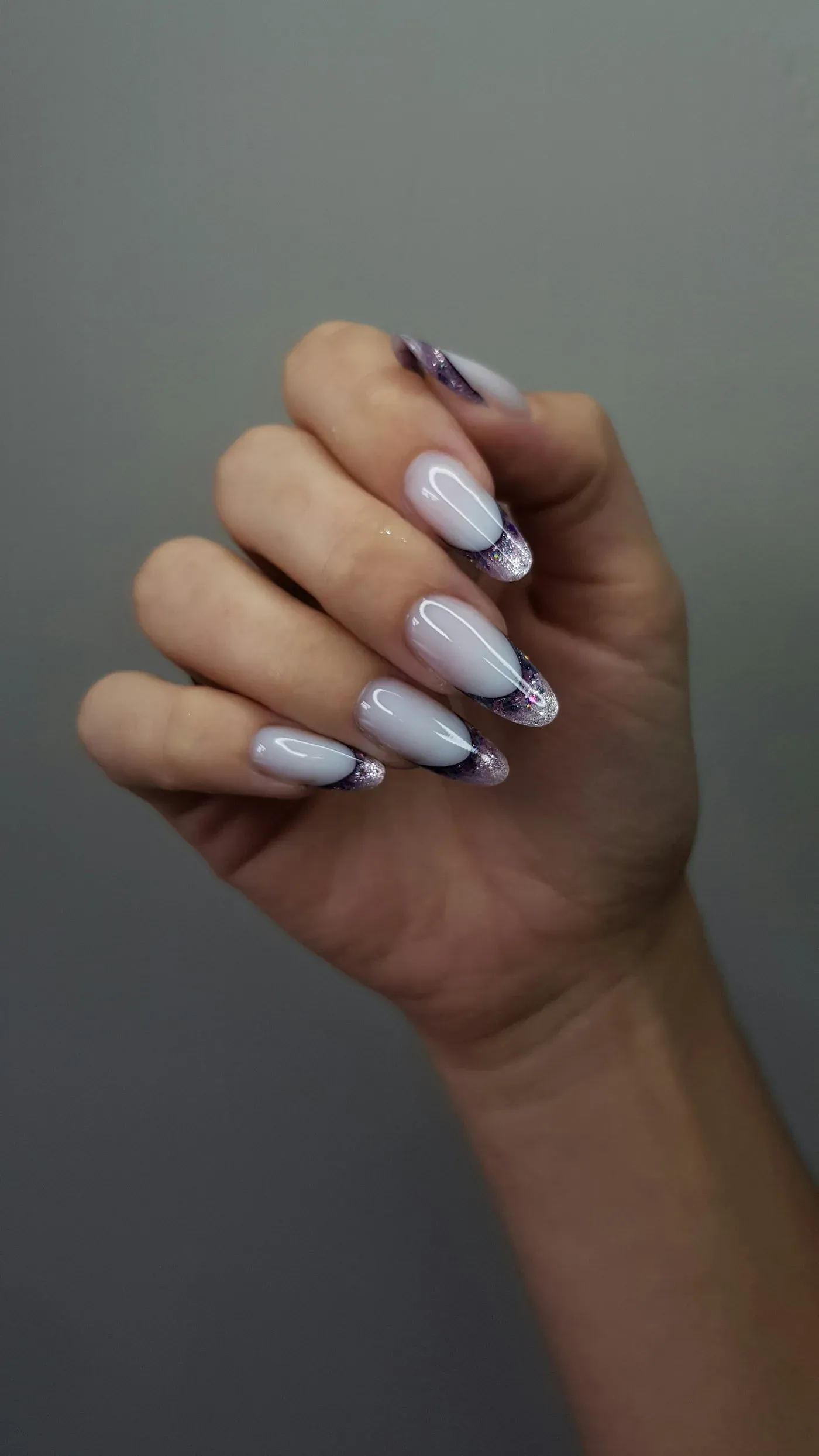
Your result may be a clear preference for one selected style, rather than a rule that one material is always better. That is a useful buying decision: it gives you an approved reference for the product you actually plan to sell. Keep that reference available when discussing a repeat order. If the material, construction, shape or finish changes, flag it for review instead of assuming that the previous approval automatically applies. Keep the original sample or a clearly labelled reference available for anyone else on your team who reviews the next purchase, so the comparison never depends on one person's memory.
The shortest route to a consistent reorder
An approved sample with its written specification is the shortest route to a consistent reorder. When the next quotation arrives, the question becomes simple: does this offer describe the same SKU, the same build and the same packaging your team already accepted, or has something changed that needs a fresh look?
Send ZONO Beauty your shortlisted SKUs and the finished feel you want, and we will coordinate the long-term manufacturing suppliers behind your press-on nail programme to prepare a sample comparison for your review.
Request a sample comparisonConclusion
Judge the description, the video, the range fit and the finished sample, and every ABS-versus-acrylic discussion ends with an approved reference your next order can be checked against.
- ABS (acrylonitrile butadiene styrene): material overview. Wikipedia. ↩
- PMMA (acrylic): material overview. Wikipedia. ↩
- United States federal cosmetics regulations, 21 CFR Chapter II Subchapter G. eCFR. ↩
- Regulation (EC) No 1223/2009 of the European Parliament and of the Council on cosmetic products. EUR-Lex. ↩