Press-On Nails for Kids: A Small Category With Real Rules
Kids press-on nails grow on repeat purchases and party seasons. What differs from adult sets, the safety questions to close with your supplier, and how retailers stock them.
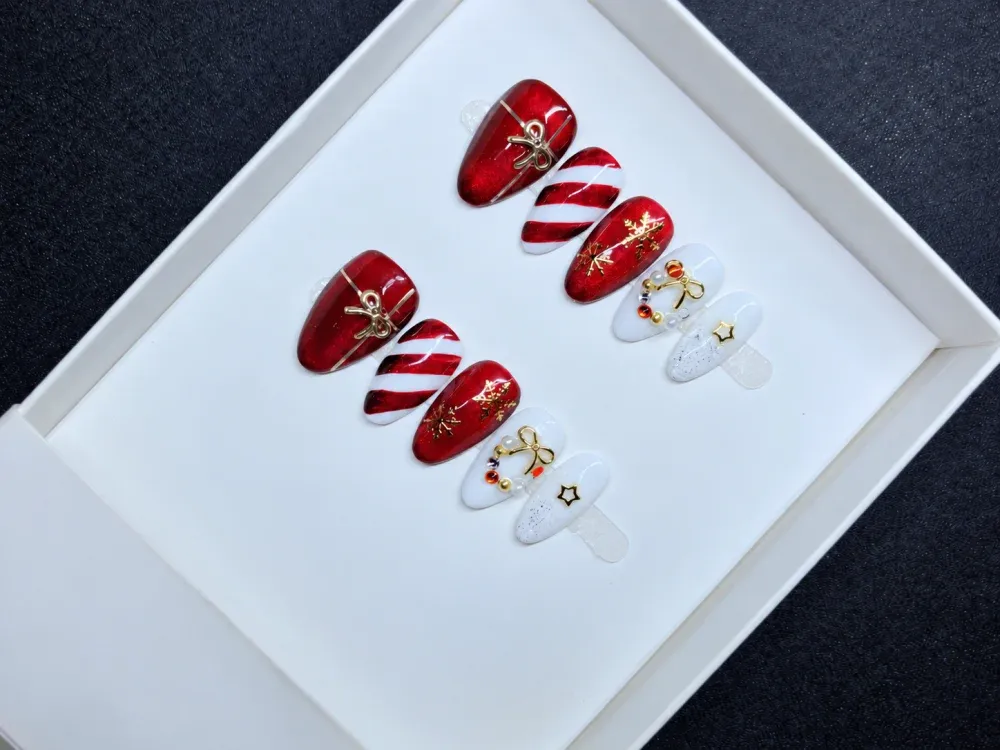
Kids press-on nails started as a dress-up novelty and became a repeat category: parents buy them for parties and school holidays, and the customer outgrows both the designs and the sizes fast enough to buy again within a year. For retailers, that repeat cycle is the entire appeal.3
A kids set is a different product wearing the same shape as an adult one: smaller fits, playful designs, gentler adhesion and a stricter safety conversation. Stocking the adult wall shorter and calling it kids is where the category goes wrong.
This guide separates what genuinely differs in a kids set, the four safety questions to close before ordering, and a stocking plan matched to how the category actually sells.
What Actually Differs in a Kids Set
Three things change and one thing must not. The fit changes: smaller nail beds need narrower, shorter tips, and a size range scaled down from adult charts. The design changes: bright palettes, character motifs, rainbows and candy themes replace adult minimalism. The adhesion changes: adhesive tabs are preferred over glue for younger users because tabs peel off cleanly without solvents. What must not change is the quality bar: edges still need smooth finishing, because children notice rough edges long before adults do.4
| Dimension | Adult sets | Kids sets |
|---|---|---|
| Tip fit | Standard adult size curve | Narrower, shorter, scaled size range |
| Design language | Seasonal palettes, minimalism, statement art | Bright, playful, character and motif led |
| Adhesion | Glue or tabs by preference | Tabs preferred; gentler hold by design |
| Wear span | One to two weeks typical | A day to a weekend; the point is the event |
| Purchase cycle | Seasonal refresh | Party and holiday driven, fast repeat |
The Four Safety Questions to Close Before Ordering
Safety conversations with a supplier should end in writing, not in reassurance. Four questions cover the ground. What is the adhesive and what age is it recommended for? Do the materials meet the toy or cosmetic safety expectations that apply in your market? Are there small parts, and what does the choking-age guidance say for this exact set? What does the packaging state, and can it state it in your market's language?
Regulatory context differs by market: United States cosmetics fall under federal FDA oversight, and toy-like products are additionally shaped by toy safety guidance. A supplier who answers the four questions with documents is a supplier you can build a kids line with; a supplier who answers with enthusiasm is not.21
Keep the safety answers attached to the SKU they describe, in writing, before the first order ships. A kids line built on filed answers survives the questions that arrive with your first customer complaint; one built on verbal reassurance does not.
How the Category Sells and How to Stock It
Kids press-ons sell in spikes that are predictable years out: birthday party season, school holidays, Halloween and the December window. That rhythm suits a light permanent fixture plus seasonal capsules. Press-on nail stock mixes start from 100 sets total, so a workable kids fixture is two or three everyday-playful designs at 15 to 20 sets each, topped with a seasonal capsule that rotates.
Placement matters more than depth. Kids sets sell as add-ons at the counter and as gifts, so the fixture belongs where a parent stands, not buried in the adult wall. Retailers who place a small kids tray beside the checkout consistently out-sell those who file kids designs inside the main grid.
What a Kids Sample Review Covers
A kids sample review runs the adult checklist plus a kid-specific layer. The adult layer is familiar: finish, edges, profile, decoration attachment. The kid layer asks the questions that only show up on small hands and rough handling.
| Check | How to test it | What passes |
|---|---|---|
| Fit on small hands | Apply to the smallest intended user or a size-matched hand | Tips cover the nail bed without overhang at the sides |
| Tab adhesion | Wear through one active afternoon | Holds through play; removes cleanly without solvents |
| Edge finish | Run a finger around every tip | No sharp flash or lifting edge anywhere in the set |
| Decoration hold | Flex each decorated tip gently | Charms and print stay put under the flex a kid will give them |
| Size range | Lay the full size curve out | A small user finds a true fit at both ends of the range |
Photograph the review like a parent would: worn on small hands, in daylight, mid-activity. Kids-set listings that show real wear on real small hands consistently out-convert the styled flat shots borrowed from adult listings, because the parent's first question is exactly the one those photos answer.
Review kids samples on the users who will wear them, not on an adult hand with the smallest tips. Fit, adhesion and edge comfort all read differently on a child's hand, and every one of the three is a return waiting to happen if it is assumed instead of tested.
Two more habits keep a kids section healthy. Refresh the seasonal capsule on a calendar, not on instinct: the Halloween capsule goes up six weeks out and comes down on the day, because a kids wall that stays seasonal year-round stops reading seasonal at all. And keep the price point honest: a kids set is an add-on in a parent's mind, and the shelf that treats it as one sells four times the volume of the shelf that prices it like an adult fashion set, at roughly the same counter space.
The supplier conversation for the capsule is deliberately small: which kid-appropriate designs exist now, what the lead time is on a mixed 100-set order, and what the packaging already states about age. Small orders on a calendar, reviewed each season, fit this category better than one large bet, because the designs that a seven-year-old loves expire faster than any adult trend ever will.
Gift seasons deserve their own sentence: kids sets are bought by adults as gifts, which means the packaging sells twice, once to the child who wants the design and once to the adult who wants it to look like a present. A set that photographs well in a gift context earns shelf presence in book shops, toy stores and gift shops far outside the usual beauty retail circuit, and those channels buy on the same 100-set minimums as any other retailer, with the seasonal calendar doing most of the merchandising work for them.
Send ZONO Beauty your market and the designs you have in mind, and we will confirm available kid-appropriate styles, adhesive options and the documentation to close your safety questions.
Request a kids-line quotationFrequently Asked Questions
What age are press-on nails suitable for?
That is an answer per product, not per category: it depends on the adhesive type and the small-parts guidance for the exact set in question. Get the written recommendation from the supplier and follow your market's standards.
Why tabs instead of glue for kids?
Tabs hold for the event window and peel off without solvents, which suits shorter wear spans and younger users. Glue remains available for older tweens who want longer wear across a holiday week.
Do kids sets need their own packaging?
Age guidance and small-parts information belong on the packaging, so kids lines do need packaging that can carry that text clearly. Custom boxes start from 300 sets; ask what the stock packaging already states before deciding.
How many sets should a kids fixture hold?
A light permanent fixture of two or three playful designs plus a rotating seasonal capsule fits inside a 50-set stock mix comfortably. Depth stays small; the calendar does the selling.
Can kids designs be mixed with adult styles in one order?
Yes, easily. Stock mixes take designs across the range from 50 sets total, which lets a retailer test a kids tray without a separate minimum or a separate production slot on the calendar.
The last operational note: kids designs age faster than adult stock, so mark each capsule with a season label and clear it on schedule. A kids wall that rotates cleanly reads fresh to the same customer every visit, which is the repeat behaviour the whole category runs on, and it keeps the cash conversion on kids stock faster than on any other section of the range, provided the calendar is actually honoured.
Conclusion
Kids press-on nails reward the boring, repeated work: written safety answers, correct fits and a fixture placed where parents actually stand. Get those right and the category's fast repeat cycle does the rest.