Ordering One Press-On Nail Sample per Colour: How to Compare the Total Cost
Plan one press-on nail sample per colour with a clear item list, delivery scope and cost breakdown. Keep sample totals separate from bulk-order pricing.
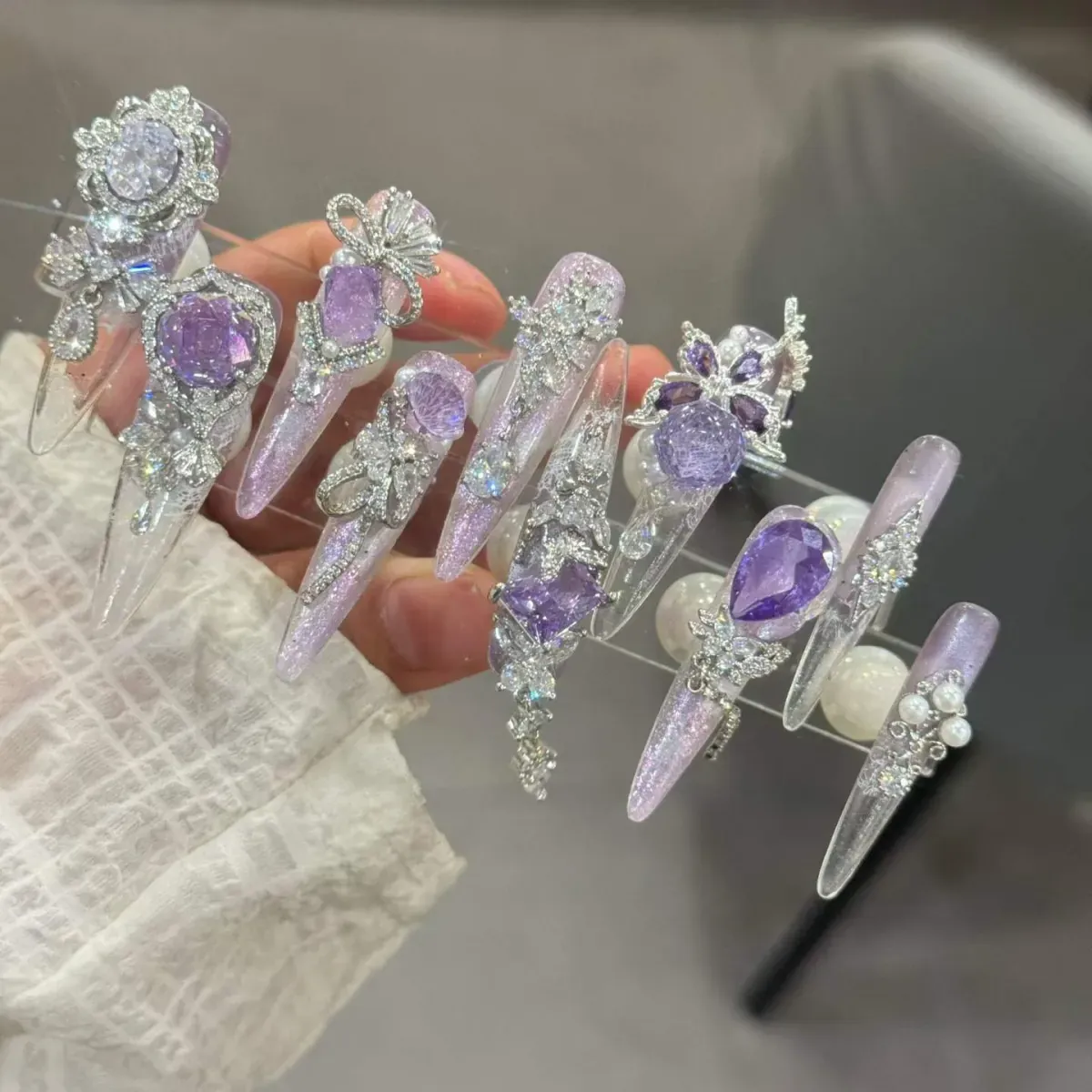
A sample quotation should identify what you are receiving, which charges apply to those samples and what delivery includes. Divide the total by the number of sample sets only to understand that sample purchase; it does not establish the unit price of a future bulk order.
If you run a beauty store or nail brand, asking for one set in each colour can be a sensible way to explore an assortment. The difficulty is knowing whether the supplier has quoted existing examples, new work for your designs, packaging trials or a mixture of these.
Before deciding that a sample offer is too expensive—or unusually cheap—make those contents visible.
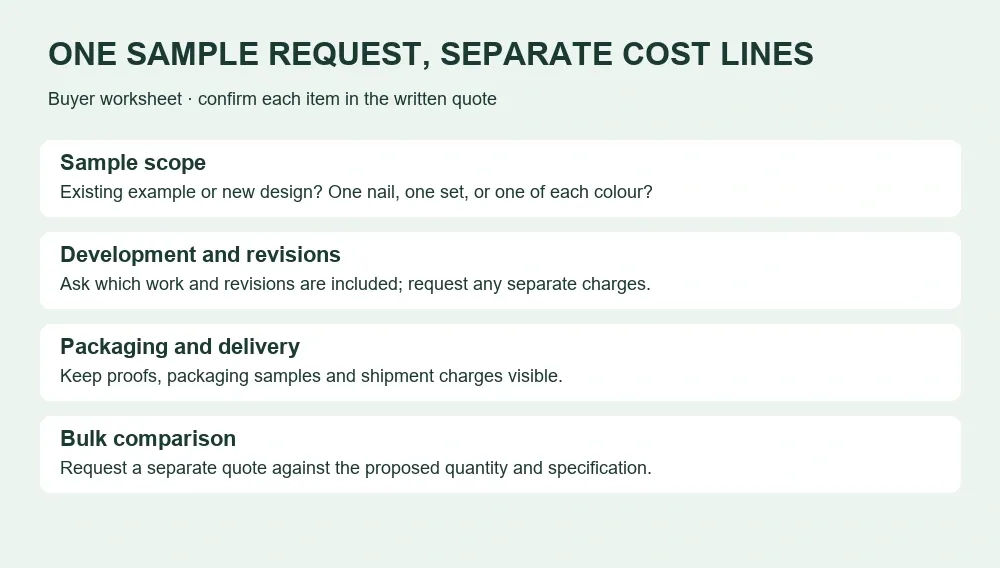
What does “one of each” include?
Turn the request into a written list. Give every selected design or colour a reference, quantity and purpose. Identify which items you want to see for colour, finish, sizing information or packaging.
| Field to confirm | What to write |
|---|---|
| Item reference | Product link, design code or clearly labelled image |
| Sample type | Existing example, requested custom version or packaging sample |
| Quantity | Number of complete sets for that item |
| Included contents | Nails and any confirmed accessories or packaging |
| Review purpose | The decision this sample should help you make |
| Open questions | Details the sample will not establish |
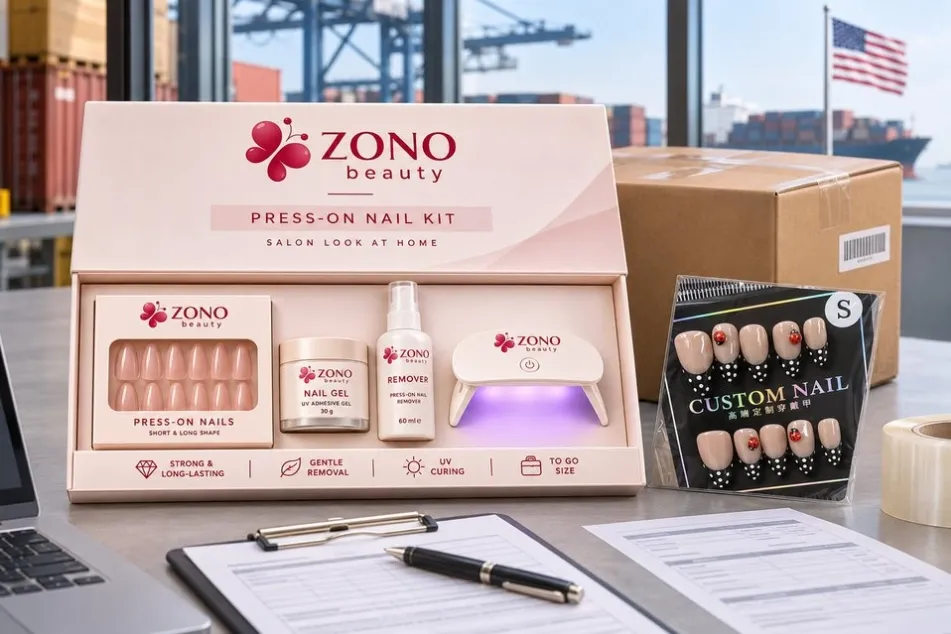
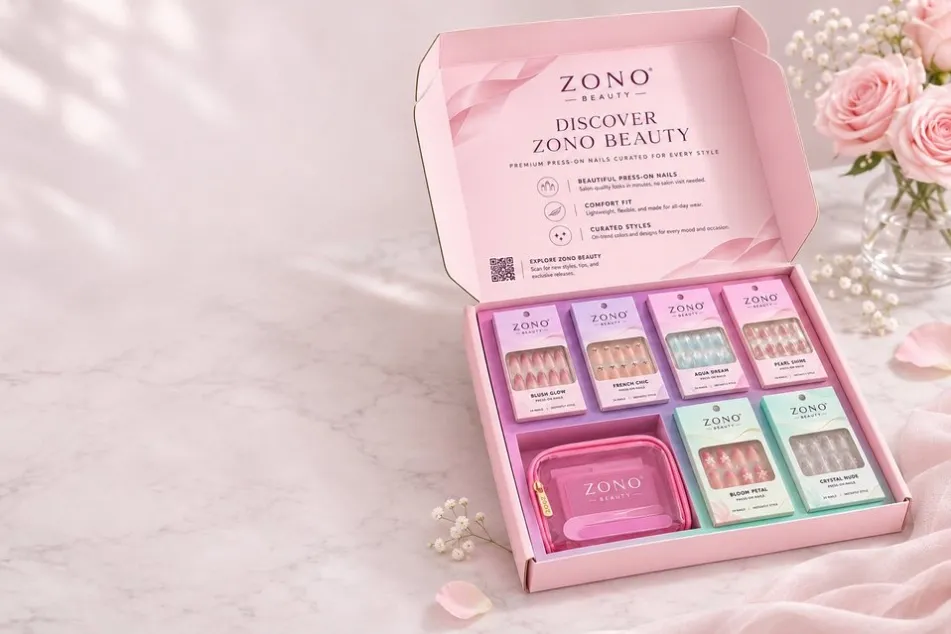
Start with the relevant press-on nail styles or project route, then ask the supplier to confirm each line. A photograph showing a branded box or accessories does not by itself establish what will be included in your parcel.
Which charges belong in the sample total?
Request a breakdown rather than one unexplained amount. The quotation should distinguish the sample goods, any separately quoted design or development work, packaging, delivery and other stated charges. Ask whether any item is optional and whether a change would require a revised quote.
Use a simple comparison sheet:
| Cost line | Quote A | Quote B | Same scope? |
|---|---|---|---|
| Listed sample sets | Enter quoted amount | Enter quoted amount | Check references and quantities |
| Separate custom work, if quoted | Enter amount or not applicable | Enter amount or not applicable | Check deliverable and revisions |
| Packaging and accessories | Enter stated inclusions | Enter stated inclusions | Compare the actual contents |
| Delivery | Enter quotation | Enter quotation | Compare destination and service scope |
| Other charges or exclusions | Record them | Record them | Resolve before payment |
The sheet is a request format, not a ZONO price list. Sample charges, delivery and any credit against a later order require written confirmation for the project.
Do you need every colour in the first parcel?
Begin with the questions you need answered. If several options differ only in a visual detail, ask what can first be clarified through current photographs or video and what still needs a physical sample. Do not assume that one sample proves the fit, finish or construction of a different design.
You can also request two clearly defined sample selections: the full assortment and a narrower selection covering your immediate decisions. Compare their written totals and what each would leave untested. Reducing the sample list is useful only if you retain enough evidence to choose the intended products.
When the samples arrive, use the retail buyer sample checklist to record an outcome for each item. That makes the sampling spend useful to the next sourcing decision.
How should you compare samples with a later bulk quotation?
Request the bulk quotation separately, using a proposed quantity by design, the accepted product specification, packaging and delivery destination. Mark anything still dependent on sample approval.
A sample order and a bulk order can have different contents and separately scoped work. Comparing their per-set totals without those assumptions can therefore be misleading. Ask the supplier to explain the difference for your project; do not assume that a sample fee will be deducted or that today’s sample freight predicts a bulk shipment.
Send ZONO your labelled sample list, your business or sales-channel link, destination postcode and proposed bulk quantities. Ask for the sample total and bulk assumptions as separate parts of the response, so you can decide what to evaluate before committing further.