Sourcing, Packaging & Formula
Will This Lip Gloss Tube Close at Your Target Fill?
A focused check for a packaging buyer: separate the tube's nominal description from the target net fill, then ask whether the exact tube, wand, wiper, and cap assembly can be filled and closed.
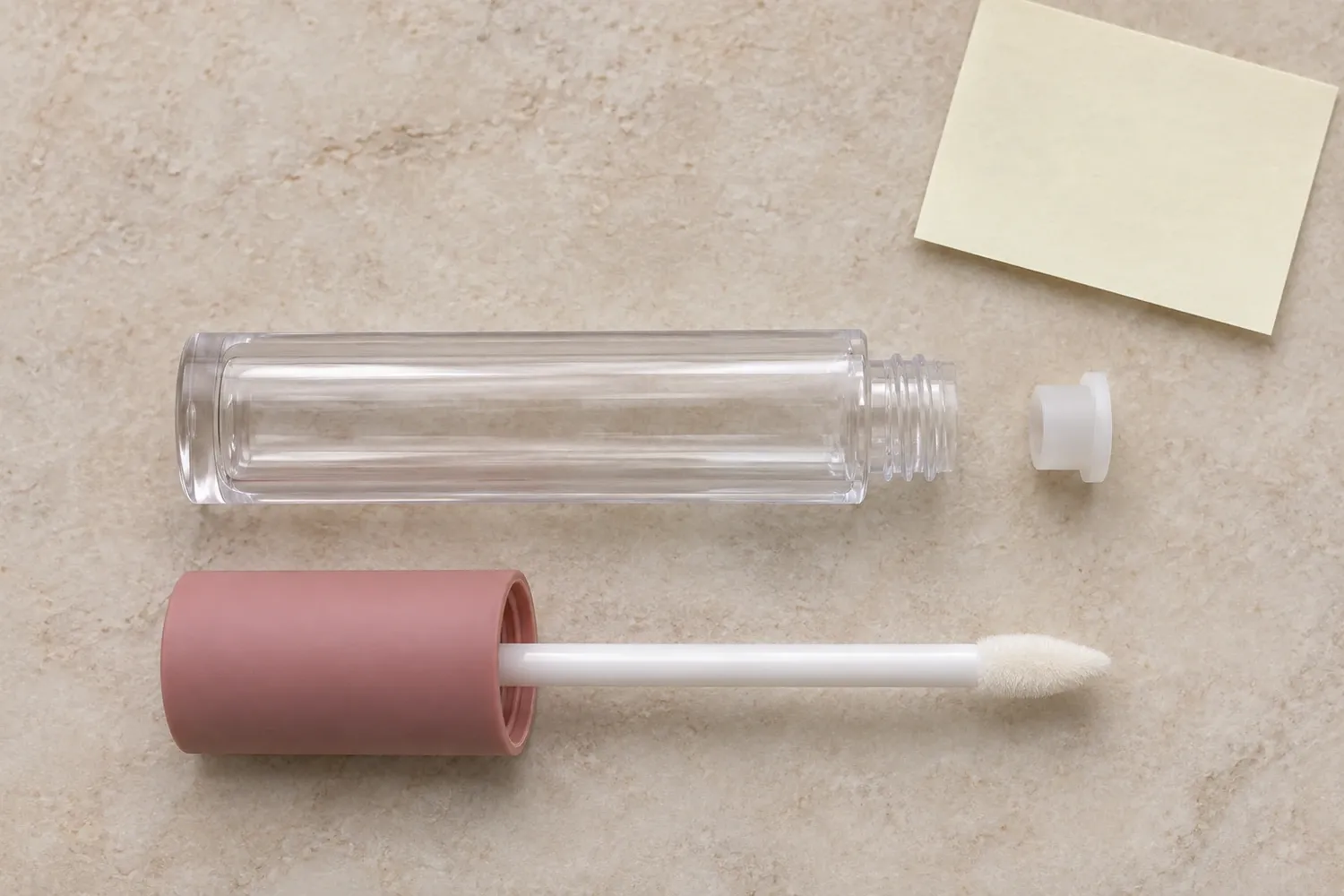
Identify the parts that went through the fill trial before approving the assembled sample. Illustration generated with AI.
A supplier page may describe a lip gloss tube by nominal container size. Give the filler your target net fill and the unit you use. Keep those separate, then ask one focused question: can this exact tube, with this wand and wiper, be filled and closed to that target?
What should the filler confirm before a trial?
Ask the filler how they set and check the amount, and whether they check it before or after closure.
Send the intended formula and exact matched set: body, neck, wiper, applicator, stem, and cap. Give the target net fill with its unit and assembly steps. Ask the filler to trial that full set with the formula at that amount. This lip gloss tube sourcing guide can help frame component questions without replacing the trial.
What can the first closure show?
Suppose a film of gloss appears at the neck as the wand goes in, before the cap seats. Record where and when it appears and which parts are in use. Keep the cause open until the filler can reproduce the mark.
Rerun under controlled conditions with the same formula, matched parts, target amount, and assembly sequence. Change one variable only if needed. If the observation repeats, ask the filler to explain the setup before changing a component.
First closure tells you what happens on the filling line. Shipping leakage needs its own evaluation, as does compatibility evaluation of formula, materials, and use conditions.
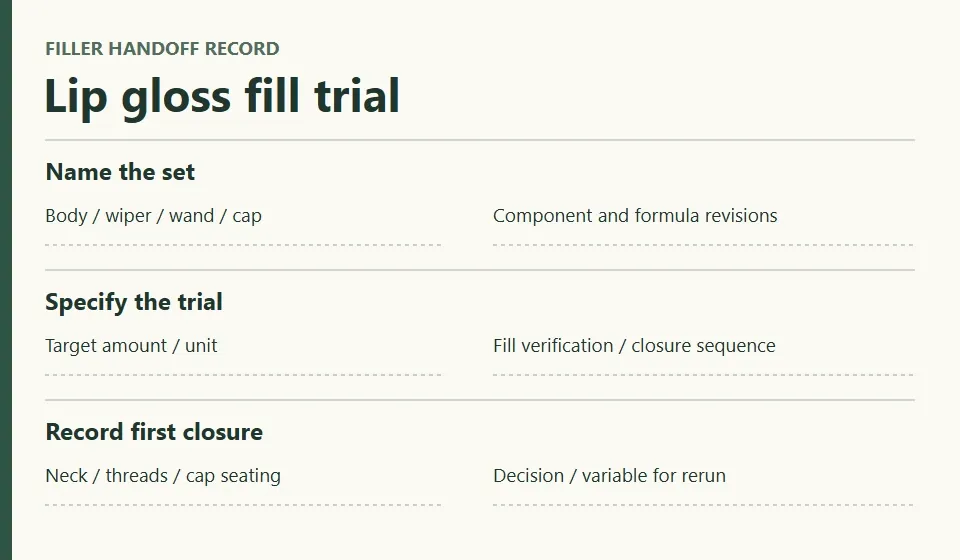
Have the filler record the target amount and the component revisions together so a rerun can reproduce the set.
What should you send the filler?
You could ask, “Can you run this formula with the listed component revisions at our target fill? Please tell us how you checked the amount and what you saw at the neck as the first cap went on.”
Sign off the recorded assembly and target only if the trial meets the fill and closure checks you agreed with the filler. If a different wiper or wand is proposed, identify that revision and ask which checks need repeating.
To align on this check before a trial, send the tube description, target net fill and unit, and trial assembly details through our contact page.