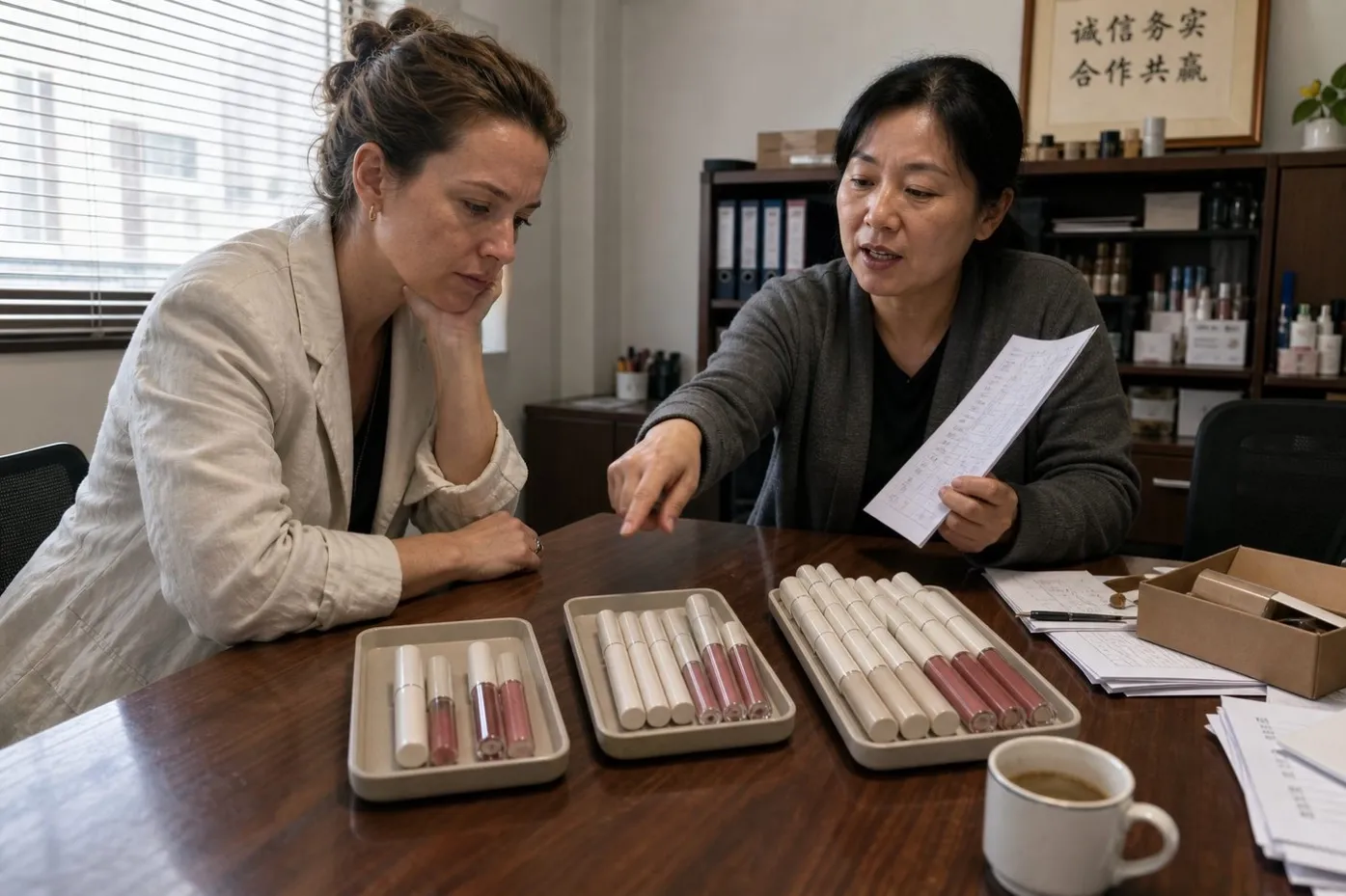
How to Compare Supplier Quotes for Lip Makeup Products to Avoid Hidden Costs?
Compare lip makeup supplier quotes by scope, project evidence, commercial terms, and configuration-specific questions instead of headline unit price.
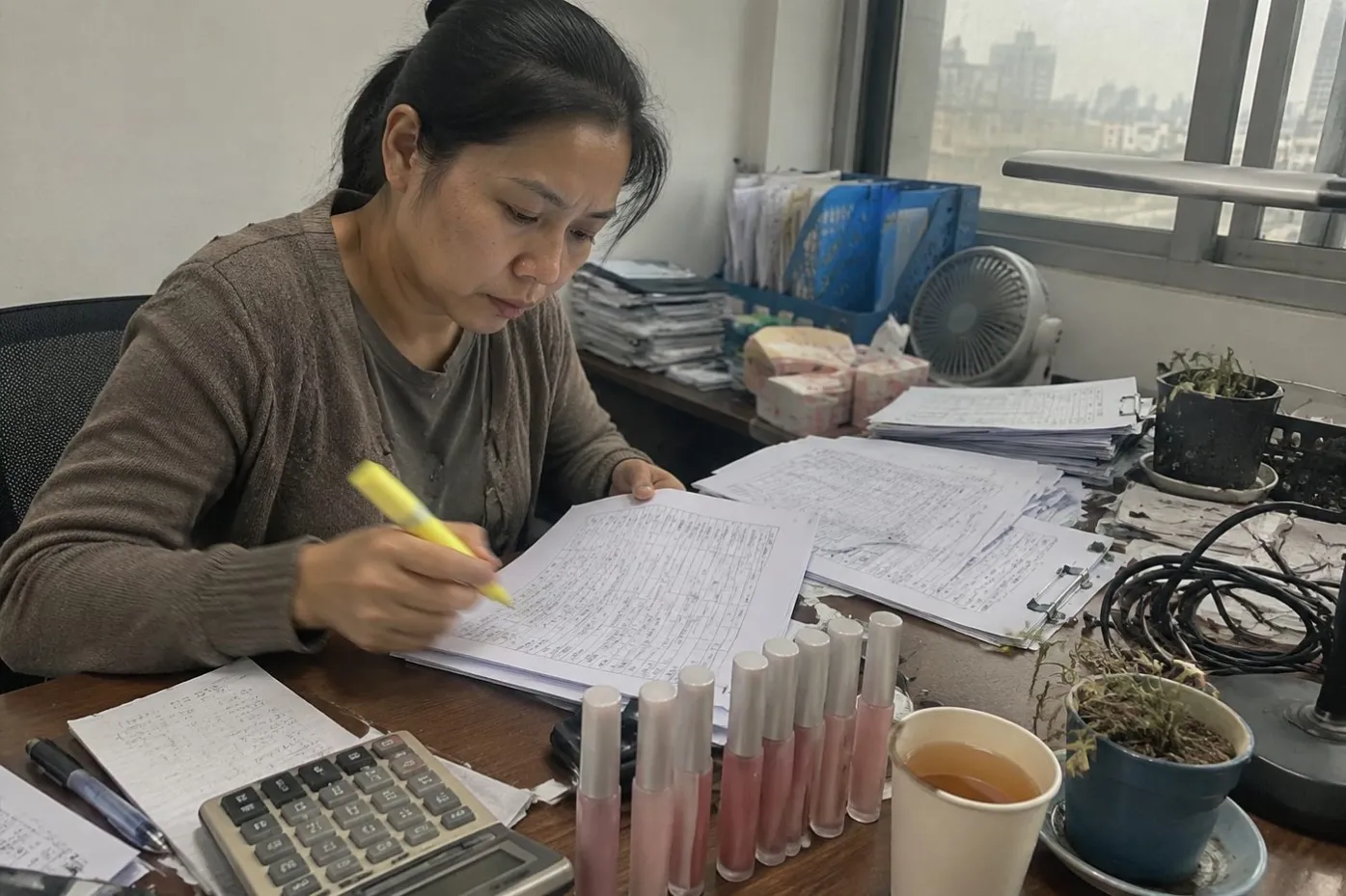
Supplier quotes for lip makeup can look identical on paper while covering different formula, packaging, testing, logistics, or service assumptions. Compare the full scope before deciding which option protects margin.
To compare supplier quotes for lip makeup products fairly, force every supplier to quote the identical specification, request a full unit price breakdown, separate one-time fees from recurring costs, confirm every blank line item, and compare total landed cost — never the headline unit price alone.
Quote sheets can describe different scopes in different ways. This guide sets out the questions that help a buyer identify scope differences, potential extra costs, and compatibility questions before comparing numbers.
Why do lip makeup supplier quotes vary so much even when the formula and packaging look identical?
Two lip gloss quotes for a similar brief may include different work. Map the scope line by line before treating a difference in unit price as a saving.
Lip makeup quotes vary because suppliers scope them differently. Some include secondary packaging, testing, and filling labor, while others quote bare bulk formula only. Sourcing channel, formula grade, packaging components, and the assumed order volume all shift the final number.
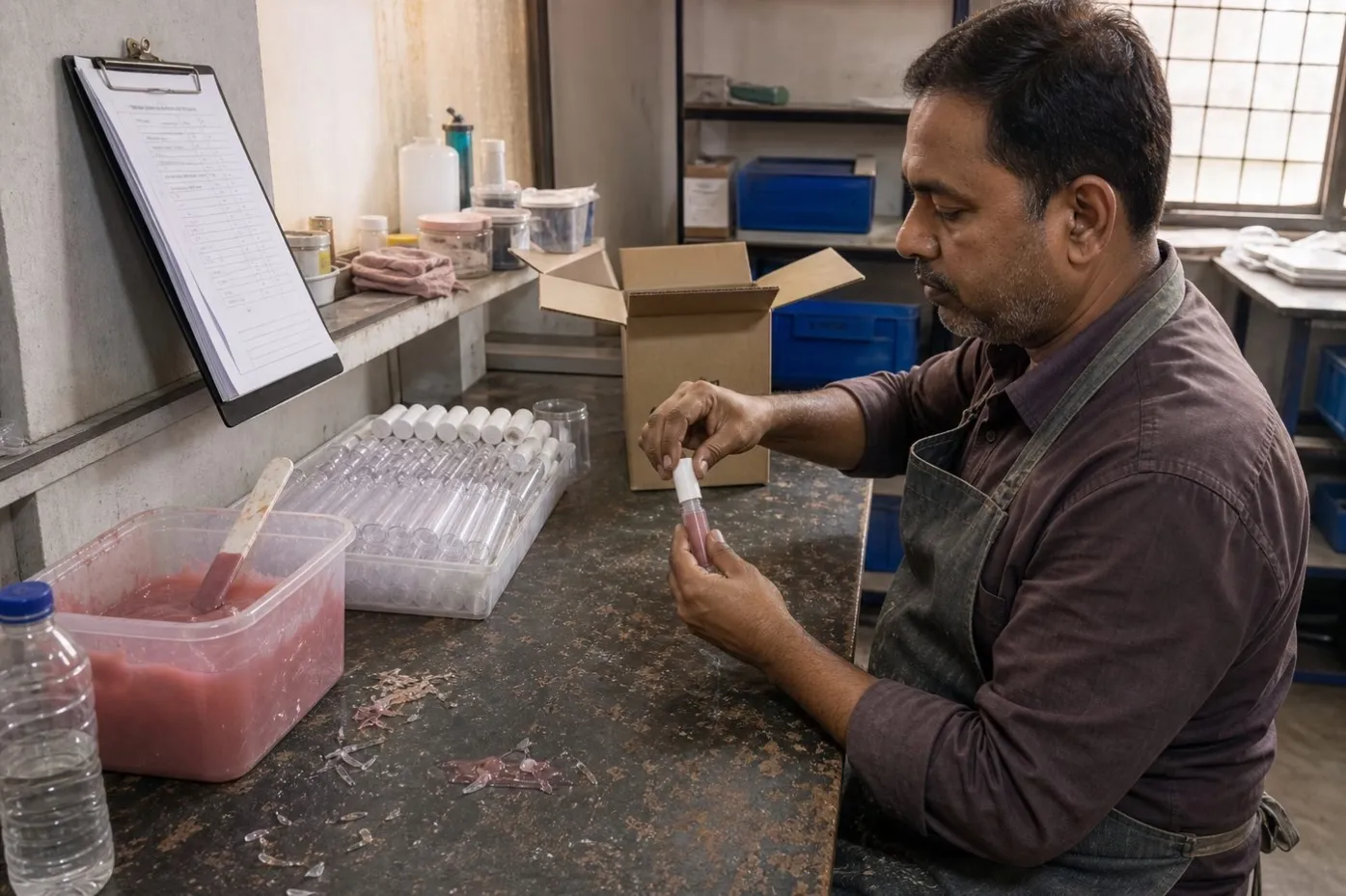
Split every quote into four parts. Ask each supplier to identify what is included, optional, extra, or not offered for every cost line before comparing unit prices.
The four-part unit price breakdown
Ask every supplier to separate the quote into formula bulk, primary packaging, filling and assembly, and secondary packaging. The purpose is a like-for-like comparison of each supplier's written scope:
| Cost component | Common benchmark range | What buyers often miss |
|---|---|---|
| Formula bulk + filling | Supplier-specific; request a like-for-like breakdown | Ask whether the selected shade route changes scope, quantity, or commercial terms |
| Primary packaging (tube, cap, wiper) | Supplier-specific; confirm component and decoration scope | Decoration method may be quoted separately |
| Labeling and assembly | Supplier-specific; confirm packaging and artwork scope | Sometimes excluded and billed later |
| Shipping and logistics | Supplier-specific; confirm service and testing scope | Depends entirely on delivery terms |
Stock, private label, or custom formulation
The development route changes the cost structure. Ask whether each quote assumes a stock formula, a private-label route, or custom development, and request the separate setup, formulation, packaging, testing, and sampling items that apply to that route.
Direct factory versus broker pricing
Direct sourcing may remove certain intermediary fees, but it does not remove the need for a clear scope of work, communication responsibilities, compatibility evidence, and an issue-resolution process. Compare like for like: if a lower quote does not explain what it includes and excludes, ask for the same level of detail before treating it as a saving.
What hidden costs should I watch for when comparing lip gloss or lip tint pricing?
A quote may be accurate for its stated scope while still excluding cost lines a buyer needs for the project. Review the items outside the unit-price column before comparing suppliers.
Check for tooling or mold fees, per-SKU testing charges, freight and customs duties, yield-loss billing, regulatory work, formula IP terms, and ingredient-volatility clauses. Ask the supplier which items are included and which remain variable or additional.
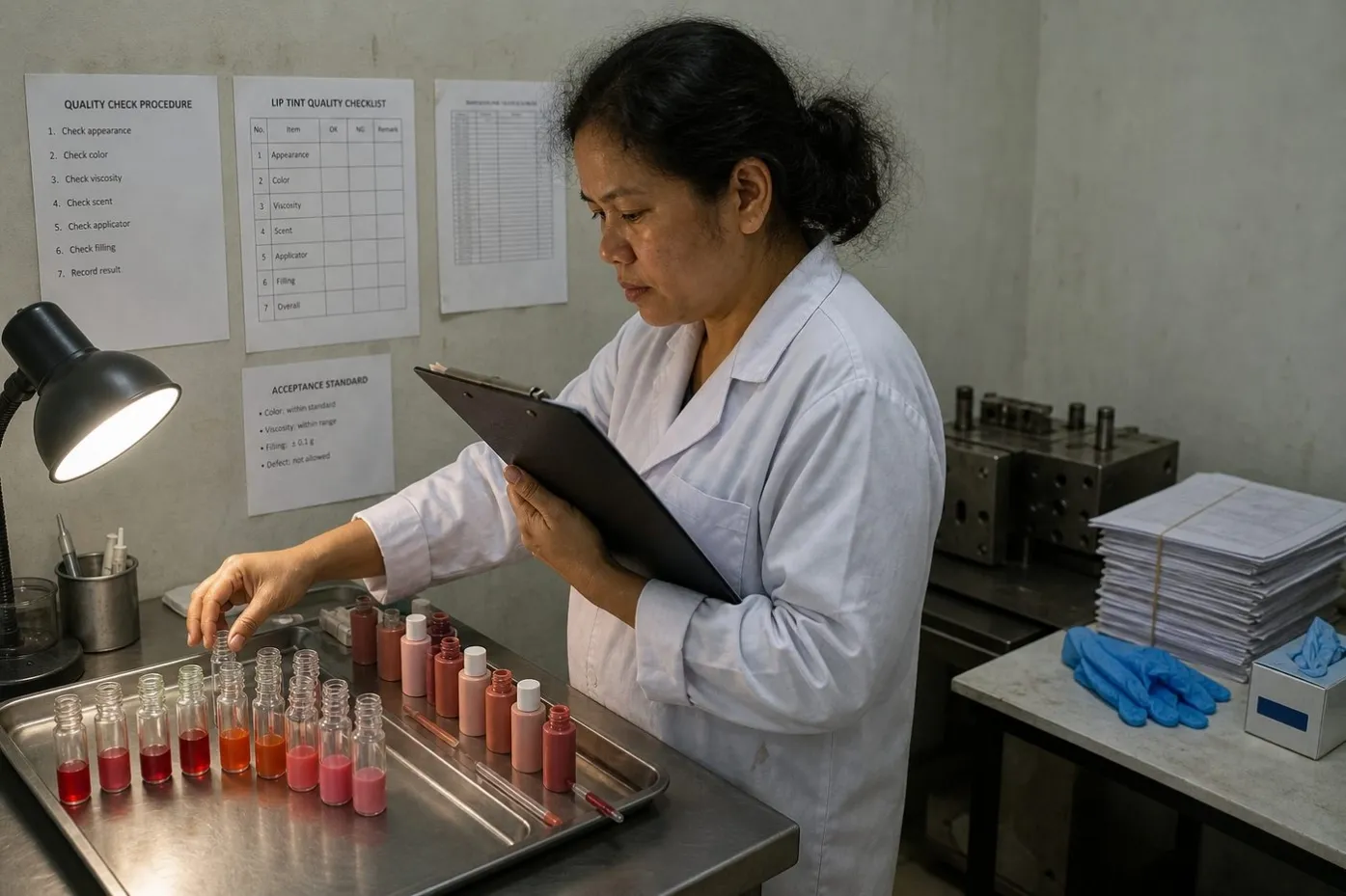
Use a hidden-cost checklist to ask each supplier for the same scope and charge basis:
| Hidden cost | Buyer question | When to confirm |
|---|---|---|
| Tooling and mold fees, printing plates | Request a written supplier-specific charge | First production run with custom branding |
| Target-market technical or quality evidence, if confirmed as applicable | Is this evidence applicable, and is it included, extra, or not offered? | Before approving the project scope |
| Freight and customs duties | Confirm the basis and destination-specific amount | At shipment and import |
| Yield loss and scrap rates | Ask whether any yield, calibration, or purge allocation applies | Delivered quantity versus billed quantity |
| Target-market regulatory lifecycle work, if the responsible adviser confirms it applies | Who owns any applicable lifecycle work, and what cost basis applies? | Before choosing the commercial route |
| Formula IP transfer or exit fees | What formula ownership, transfer, or exit terms apply to this project? | Before sampling or commercial approval |
The clauses buyers skip
Three items need written scope. First, regulatory documentation and any target-market lifecycle responsibility can sit with different parties, so ask the responsible regulatory adviser who owns each task and which costs apply. Second, ask the supplier to state formula intellectual-property and transfer terms in writing before sampling. Third, ask whether the quote contains any raw-material price-adjustment mechanism and what approval process applies. Do not assume these items are included or excluded without a written answer.
Freight and logistics charges deserve equal scrutiny. An EXW quote may exclude charges after the factory door. Confirm the delivery basis, destination-specific import requirements, insurance, delivery, and billed-quantity basis before comparing landed cost.
How do I know if a low quote will cause packaging or formula mismatches once bulk production starts?
For a high-viscosity lip oil or gloss, ask for compatibility evidence for the actual formula, wiper, applicator, and tube combination. A visual sample alone may not show every issue that could appear during filling, storage, or transport.
A low quote does not by itself prove what is included or excluded. Ask the supplier to identify the selected components, formula-and-packaging evidence, sample basis, and acceptance criteria, then confirm the exact approved specification in writing.
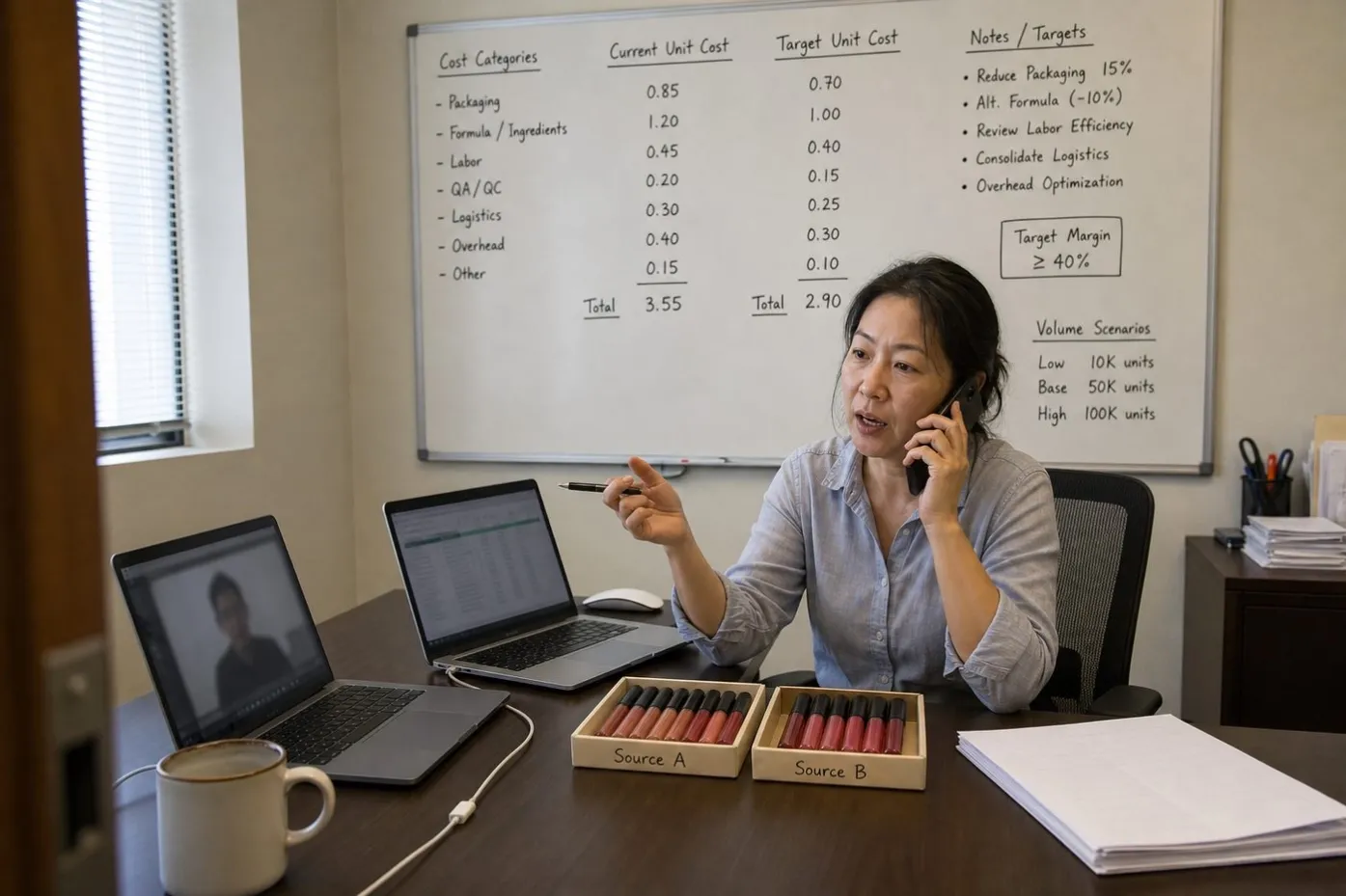
A lower price needs a written scope. Use the following questions to identify what changes between quotes before treating a difference as a saving.
Wiper-to-viscosity compatibility
Ask the supplier whether the selected wiper, applicator, and tube have been evaluated with the actual formula and component version. When formula and packaging are quoted by different parties, document who owns the evidence request and acceptance criteria before approving the component.
Per-shade Minimum Order Quantity traps
Ask whether the quoted total quantity has a per-shade, per-component, or per-artwork condition. Compare every supplier at the same total quantity and shade split, then document the assumptions before ranking quotes.
Sample-to-bulk drift
Another risk is drift: bulk goods that differ from the approved sample in color, texture, or packaging fit. Ask each supplier to state the quality evidence it can provide, the acceptance criteria, the inspection rights, and what the quote covers if agreed requirements are not met. Confirm the specific stability or compatibility evidence relevant to the formula and packaging instead of assuming a duration or protocol.
What should I ask suppliers to get quotes I can actually compare side by side?
Accuracy should take priority over speed of comparison. Confirm every blank cell as included, extra, or not offered before comparing supplier quotes for lip makeup products.
Send every supplier the same written specification, then require an itemized quote covering formula, primary packaging, decoration, filling, secondary packaging, testing, tooling, and delivery terms. Confirm whether each blank line item is included, billed separately, or not offered before comparing any numbers.
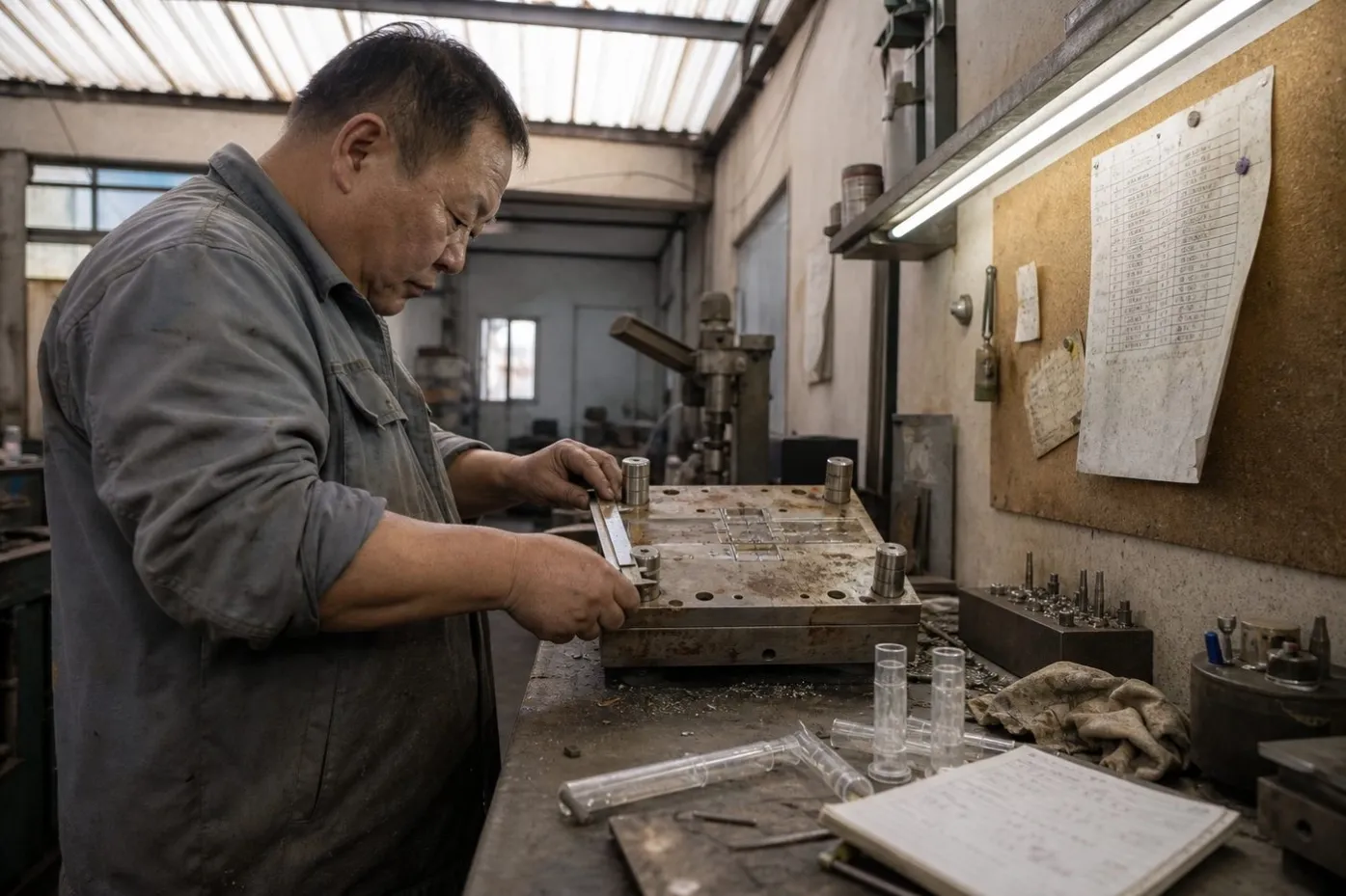
Use a same-scope quote table. For example, one supplier may include an outer carton in the unit price while another lists it separately. Record every line so the buyer can compare the same scope.
| Line item | Supplier A | Supplier B | Status to confirm |
|---|---|---|---|
| Bulk formula (per shade, per unit) | Quoted | Quoted | Stock or custom base? |
| Primary packaging costs (tube, cap, wiper) | Included | Blank | Included / extra / not offered |
| Decoration (printing, hot stamping) | Extra | Included | One-time plate fee? |
| Secondary packaging (outer box) | Included | Blank | Included / extra / not offered |
| Applicable technical or quality evidence | Blank | Extra | Per-SKU cost? |
| Tooling and mold fees | Waived | $ one time | Refundable at volume? |
| Delivery basis (EXW / FOB / CIF / DDP) | FOB | EXW | Normalize before comparing |
| Lead time estimates | Stated | Blank | Sampling and bulk separately |
Run the numbers twice, then stress-test
Once the table is filled, calculate two decision totals. The first-order total includes the documented one-time charges and product subtotal. The repeat-order scenario removes only the charges the supplier confirms are one-time. Compare both scenarios using the written scope and commercial terms.
Then stress-test the quote with four questions. What happens if the order quantity changes tier? What changes if packaging is upgraded? What is the charge for revising a shade after approval? What changes if terms shift from EXW to FOB, CIF, or DDP? Also confirm payment terms, quote validity, and whether prices can change after sampling or artwork approval. A number without an identified scope is not enough for a decision.
Conclusion
Do not approve a quote on headline unit price alone. Normalize the specification, itemize every line, confirm every blank, and compare the written commercial scope before choosing a route.
Next step: Use a same-scope table for your supplier calls, review relevant private-label development options, then discuss your lip makeup project when you need to compare a written route or configuration.